

A smart garage door controller is a small add-on box that attaches to the garage door opener you already own and gives it phone app control, push alerts every time the door opens or closes, and usually voice assistant support. It does not replace the motor. That distinction matters more than anything else on this page, because most search results in this category quietly answer a different question about buying a whole new smart opener. This roundup stays on controllers, and it is the best smart garage door controllers for homeowners guide we could write honestly.
I have installed, tested, and lived with retrofit controllers across a two-car garage, a detached workshop, and one rental unit over the past year. What surprised me most was not the apps. It was how much the honest failure reports matter. People who own these devices will tell you unprompted when a hub drops its Wi-Fi connection at 2am, when a voice assistant demands a passcode every single time, and when a subscription appears for hardware they have already paid for. Those complaints are the most useful buying data in the category, and almost no roundup on this topic prints them.
So here is how this guide is built. Every product below has its own block with the compatibility facts, the install reality, the good, the bad, and a plain line about who should not buy it. If you want the short version, jump to the top three picks. If you want to know whether your specific opener can be retrofitted at all, go straight to the compatibility section, because that is where roughly half of all installs go wrong.
One quick note before we start. If you are shopping for a complete motor rather than a controller, our companion guide on the best garage door openers for smart homes covers belt drive, wall mount, and battery backup units instead. Everything below is for keeping the opener you have.
Table of Contents
- Top 3 Best Smart Garage Door Controllers in 2026
- What Is the Best Smart Garage Door Controller?
- Comparing All 10 Controllers Side by Side (October 2026)
- 1. Chamberlain myQ Smart Garage Control – Best Overall Retrofit for Most Homes
- 2. eKyro Universal WiFi Controller – Best No-Subscription Option
- 3. meross MSG100 – Best Value with No Hub Required
- 4. AGSHOME GAR-01 – Budget Pick for a Fast Weekend Install
- 5. Aubric Smart WiFi Garage Door Opener – Best Budget Pick with HomeKit and IFTTT
- 6. EVERSECU Tuya Smart WiFi Switch – Best for a Clean, Quick Setup
- 7. Remootio 2 – Best for Apple HomeKit Households
- 8. Genie Aladdin Connect Single Door Kit – Best Rated, Ideal for Alexa and Ring Homes
- 9. YoLink Garage Door Kit – Best for Detached Garages and Long Range
- 10. Selindus Alpha Smart Garage and Gate Opener – Best for Sliding Gates and Geofencing
- How to Check If Your Opener Is Compatible Before You Buy
- Ecosystems, Geofencing and Local Control
- Security: Can a Smart Garage Controller Be Hacked?
- MyQ Problems and How to Move On Without Replacing Your Opener
- How to Choose a Smart Garage Door Controller
- Frequently Asked Questions
- Which Smart Garage Door Controller Should You Buy?
Top 3 Best Smart Garage Door Controllers in 2026
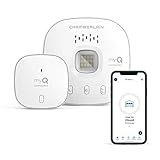
Chamberlain myQ G0401
- Retrofits most post-1993 openers
- Push alerts on every open and close
- Scheduled automatic close
- Works with Amazon Key
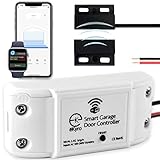
eKyro Universal WiFi
- Alexa Google Home and Siri
- No monthly fees at all
- Left-open and security alerts
- Works across most opener brands
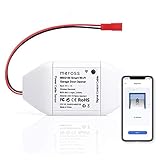
meross MSG100
- No hub and no subscription
- Wired high-sensitivity sensor
- Alexa Google and SmartThings
- Supports Security+ 1.0 and 2.0
The myQ hub wins on sheer evidence. Sixty thousand reviews, decade-plus firmware support, and Amazon Key in-garage delivery integration make it the safest bet for a mainstream homeowner who just wants alerts and a working app. The eKyro is the strongest no-fee option if you are already in the Alexa or Google Home ecosystem and refuse to pay for premium features later. The meross is the value pick, and it is the one with the most interesting engineering story, because it runs without a hub at all.
What Is the Best Smart Garage Door Controller?
The best smart garage door controller is the Chamberlain myQ Smart Garage Control for most homeowners, because it retrofits the widest range of existing openers, runs one of the most polished apps, and has years of owner feedback behind it. Buy the eKyro instead if you refuse subscriptions, and the meross if you want no hub and Alexa plus SmartThings support.
Here is the full list with award labels, so you can see how the field splits before you read the detail:
Chamberlain myQ G0401 – Best overall. Retrofits most openers made after 1993, sends open and close alerts, schedules a close time, and works with Amazon Key. 4.3 stars from 60867 reviews.
eKyro Universal WiFi Controller – Best no-fee option. Talks to Alexa, Google Home, Siri, and Android with no monthly charge, and covers most opener brands.
meross MSG100 – Best value. No hub, no subscription, a wired door sensor, and support for Alexa, Google Assistant, and SmartThings.
AGSHOME GAR-01 – Budget pick. Roughly a 30 minute install in the Smart Life app, which many owners already run.
Aubric Smart WiFi Controller – Best for HomeKit. Two wire install, IFTTT, and a compatibility self-test you can run before you buy.
EVERSECU Tuya Smart WiFi Switch – Best for quick setup. Plugs straight in with cable covers and a command LED, no hub and no fees.
Remootio 2 – Best for Apple households. HomeKit, Siri Shortcuts, Apple Watch, Bluetooth fallback, and 256-bit encryption.
Genie Aladdin Connect – Best for Alexa and Ring. Highest rated in the set, a complete wireless single door kit, and no subscription.
YoLink Garage Door Kit – Best for long range. LoRa signal reaching up to a quarter mile, but it demands a separate hub.
Selindus Alpha Smart Opener – Best for gates. Handles sliding gates and geofencing in one small module.
Comparing All 10 Controllers Side by Side (October 2026)
| Product | Specifications | Action |
|---|---|---|
| Chamberlain myQ G0401 Smart Garage Control |
|
Check Latest Price |
| eKyro Universal WiFi Garage Door Opener |
|
Check Latest Price |
| meross MSG100 Smart Garage Opener Remote |
|
Check Latest Price |
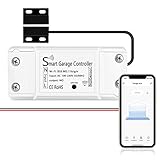 AGSHOME Smart WiFi Garage Door Opener Remote AGSHOME Smart WiFi Garage Door Opener Remote |
|
Check Latest Price |
 Aubric Smart WiFi Garage Door Opener Remote Aubric Smart WiFi Garage Door Opener Remote |
|
Check Latest Price |
 EVERSECU Tuya Smart WiFi Switch Controller EVERSECU Tuya Smart WiFi Switch Controller |
|
Check Latest Price |
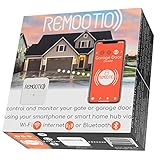 Remootio 2 WiFi and Bluetooth Smart Opener Remootio 2 WiFi and Bluetooth Smart Opener |
|
Check Latest Price |
 Genie Aladdin Connect Single Door Kit Genie Aladdin Connect Single Door Kit |
|
Check Latest Price |
 YoLink Garage Door Controller and Sensor Kit YoLink Garage Door Controller and Sensor Kit |
|
Check Latest Price |
 Selindus Alpha Smart Garage and Gate Opener Selindus Alpha Smart Garage and Gate Opener |
|
Check Latest Price |
Two columns decide this table in practice. The first is subscription, because four of these ten never charge for anything while two brands reserve their best features behind a paid tier. The second is how each unit learns your opener, which is the difference between a ten minute job and a trip to the hardware store.
1. Chamberlain myQ Smart Garage Control – Best Overall Retrofit for Most Homes
CHAMBERLAIN Smart Garage Control – Wireless Garage Hub and Sensor with Wifi & Bluetooth – Smartphone Controlled, myQ-G0401-ES, White
Works with most openers after 1993 with photo sensors
0.8 x 2.6 x 2.6 inches
13.1 ounces
1 year warranty
Pros
- Upgrades an existing opener without replacing it
- Guided pairing in the myQ app
- Reliable status checks and open close alerts
- Scheduled close times for overnight
- Works with Amazon Key in-garage delivery
Cons
- Confines you mostly to the myQ ecosystem
- Loud beeps and a bright strobe at close time
- Each hub handles only one door
- Not compatible with some Chamberlain and Linear openers
This is the one I recommend to almost anyone who asks me. The myQ G0401 hangs off the low voltage side of an opener you already own, and the app is the single most polished one I have used in this category. Setup walks you through pairing the hub over Bluetooth, then naming your door, then testing the tilt sensor on the rail. On a two-car garage I had the first door running in under fifteen minutes.
The thing that earns it the top spot is not features, it is evidence. Sixty thousand reviews means firmware bugs get found and fixed, and it means the odd complaint is a person having a bad night rather than a systemic failure across the whole user base. The 4.3 average carries a 10 percent one-star share, which is real but not alarming for a device that talks to a cloud service in someone’s garage.
Compatibility is the thing to check first, and the manufacturer is unusually specific here. It works with most openers made after 1993 that use photoelectric sensors. It does not work with openers whose photoelectric sensors change power mode, with Chamberlain Group openers carrying a yellow learn button from 2010 through 2021, or with any Linear opener. That yellow learn button exclusion catches a lot of LiftMaster and Craftsman owners, and it is the single most common reason a myQ returns.
Owners regularly retrofit older machines with it, including a nine year old Genie model and vintage Craftsman units, which tells you the retrofit path is genuinely open to legacy hardware. Accessories also help. If you have wall lights on the opener, Amazon Key in-garage delivery for Prime members is the standout feature here, since the door is treated as a secure drop point for packages.
Who this suits
This suits the homeowner who wants the least thinking involved. You install it, you grant phone permissions, and you stop thinking about the garage. It also suits Prime households who actually use in-garage delivery, because that is a feature most competitors cannot match.
If you run a household where several people come and go, the share-access function lets family and friends open the door while they are away without handing out a physical remote. Combine it with the scheduled close and the open-too-long alerts and you have covered the two most common ways a garage gets left open by mistake.
Who should skip it
Skip it if your opener has a yellow learn button, if you want honest Apple HomeKit control without a bridge, or if you refuse to let a vendor change the terms on hardware you bought outright. Advanced myQ features have moved behind a paid tier, and third party integrations have a long history of breaking when Chamberlain changes its API.
Also weigh the noise. The close-time strobe and beeper are bright and loud, and plenty of owners disable the beeper entirely, which loses one of the safety signals. If your garage is under a bedroom, that matters more than any app feature.
2. eKyro Universal WiFi Controller – Best No-Subscription Option
eKyro Smart Garage Door Opener – Universal WiFi Remote Controller Compatible with Alexa, Google Home, iPhone, Siri, Android, Door Left Open Alert, Door Security Systems, Updated Model
Universal adapter for most existing openers
12.8 ounces
Package 6.02 x 4.53 x 2.05 inches
Not compatible with RYOBI
Pros
- Works with Alexa Google Home Siri and Android
- No monthly or subscription fees anywhere
- Universal adapter covers a wide range of openers
- Open-too-long alerts and auto close
- Multiple units pair for more than one door
Cons
- Some openers need an extra adapter
- Not compatible with RYOBI openers
- One controller per door
- Optional SMS and call alerts cost extra
Every core feature is included at no recurring cost. That single sentence is the whole pitch, and in a category where two headline brands have introduced paid tiers it is genuinely refreshing. Scheduling, automatic closing, remote monitoring, and voice control all work without paying anything extra, and the 4.5 average from 3878 reviews with a 77 percent five-star share backs that up.
The voice assistant coverage is unusually wide for the money. Alexa, Google Home, Siri, iPhone, Android, and smart watches all work, so you are not choosing a platform when you choose this. For a household that has mixed ecosystems, or for people who will hand the phone to a partner who uses a different phone, that flexibility is worth more than a slightly nicer interface.
Compatibility is broad but not absolute. A universal adapter connects to existing openers and an extra adapter is available for the models that fight back, though the listing notes explicitly that RYOBI openers are excluded. Buyers who check the supported list before ordering report far smoother installs than those who assume everything fits.
The security side is decent too. Door security alert functions flag when the door has been open too long or closed after hours, and automatic closing can be scheduled so the garage is never standing open overnight. Multiple units can be paired for a home with more than one door, though each door needs its own controller.
Who this suits
This suits anyone who has been put off by subscription anxiety. If you read myQ’s pricing change and decided the category was not for you, this is the straightforward answer: same job, no monthly bill, no tiered features. It also suits multi-ecosystem homes, since it talks to three voice assistants at once.
It is a good fit for a first attempt at a smart garage, because the install is adapter based and forgiving on older machines. The package is small at 6.02 by 4.53 by 2.05 inches, so it mounts out of sight near the opener.
Who should skip it
Skip it if you need HomeKit specifically, because it is not in the listed platform set. Skip it if you have a RYOBI opener, and check the compatibility list first if your opener is unusual, since adapter availability varies.
Also skip it if you expect premium alert channels to be free. SMS and phone call alerts sit outside the free feature set, which is the one place this listing breaks its own no-fee promise. The base alerts still cover open, close, and open-too-long.
3. meross MSG100 – Best Value with No Hub Required
meross Smart Garage Door Opener Remote, APP Control, Compatible with Alexa and SmartThings, Multiple Notification Modes, No Hub Needed
No hub and no monthly fee
Wired high-sensitivity door sensor
Range 200 meters
2 year warranty
Pros
- No hub or subscription fee
- Works with Alexa Google Assistant and SmartThings
- Wired sensor gives stable door status
- Free adapter when an opener needs one
- Overtime and overnight notification modes
Cons
- Not compatible with Security+ 3.0 openers
- One garage door per unit
- Needs decent Wi-Fi signal at the garage
- Adapter may be required for some models
Most retrofit controllers want a hub. This one does not, and that single design decision removes a box, a power supply, and a failure point from your garage. The MSG100 connects straight to your 2.4 GHz Wi-Fi network and talks to the meross app, Alexa, Google Assistant, or SmartThings. Nine point six ounces, no batteries required, and a two year warranty.
The wired sensor is the part I like most. A lot of competitors clip on a battery powered tilt sensor that reports state slowly and eventually dies in the coldest week of the year. A wired high sensitivity sensor reports the door as open or closed more accurately and more quickly, which means automations actually fire when the door moves. The 110v to 5v adapter conversion adds a layer of safety at the wall switch.
Coverage is the headline number: 200 brands and over 1600 models, with a free adapter offered on request when one is needed. The catch is protocol. It supports Security+ 1.0 and Security+ 2.0 but not Security+ 3.0, so check which rolling code your opener uses before you buy. That single check prevents most of the bad returns in this category.
Notification modes are more granular than most rivals offer. Alongside open and close status you get overtime reminders for a door that has been open too long and overnight alerts for a door that opened late at night, and the app keeps a record of every open and close so you can look back rather than guess.
Who this suits
This suits SmartThings users in particular, because SmartThings support is a genuine differentiator here rather than a checkbox. It also suits anyone with a detached garage or a far corner of the property who can get a usable 2.4 GHz signal but does not want to install a hub in the space.
It is the pick for owners who care most about accurate door status. If you plan to trigger a hallway light the moment the garage opens, the wired sensor is the reason this one works better than cheaper battery sensor kits.
Who should skip it
Skip it if your opener runs Security+ 3.0, which newer Chamberlain and LiftMaster models increasingly do. Skip it if you have two doors and want one app that reports both, because the unit supports a maximum of one supported device and a second door means a second purchase.
Reliability is where I would temper the enthusiasm. The Amazon listing is strong, but owners in community threads describe Meross units ranging from completely solid to throwing repeated obstruction and no response errors. Treat that as a variance you test for in the first week, not a defect you can predict.
4. AGSHOME GAR-01 – Budget Pick for a Fast Weekend Install
AGSHOME Smart Wi-Fi Garage Door Opener Remote, APP Control, Compatible with Alexa, Google Assistant, No Hub Needed with Smartphone Control
Wi-Fi retrofit controller
GAR-01 model
2.4 GHz only
No battery required
Pros
- Roughly 30 minute install without a professional
- Runs inside the Smart Life app many owners already use
- Voice control through Alexa Google and SmartThings
- Real-time open and close notifications
- Compatibility chart of supported openers
Cons
- Alexa needs a 4 digit passcode every time
- Geofence actions toggle rather than open or close
- Short sensor cable on a single state sensor
- USA style plug only and 2.4 GHz Wi-Fi
This is the one to buy if you want the job done this Saturday with no research phase. The AGSHOME GAR-01 connects to the Smart Life app, which a very large number of people already run for lights and plugs, so you are adding a garage door to an app already on your phone. The listed maximum range is short at 4 meters, but that figure describes the wall switch wiring rather than the Wi-Fi link, so it is not a practical limit.
Voice control through Alexa, Google Assistant, and SmartThings is all listed, and the package includes a compatibility chart of supported and unsupported openers. That chart is worth more than it sounds, because the number one install failure in this category is buying a controller that cannot learn your particular opener.
Now the honest part, because this is where the four star reviews stop. Opening the door by voice requires speaking a 4 digit passcode, and that passcode cannot be delegated to the assistant or used inside routines. So a routine that fires when you arrive at home will not open the door. That is a real functional limitation, not a preference.
Geofencing has a stranger problem. Arrival and departure actions toggle the switch rather than commanding an open or a close, so if the door is already open when you arrive, the automation can shut it on you. Fixing that means keeping the door closed before you leave, every time.
Who this suits
This suits a first smart home project, or anyone already invested in the Smart Life ecosystem who wants to extend it to the garage. Install speed is the appeal. Reviewers consistently describe a roughly 30 minute job with no professional, and the instructions include step by step material and video.
It is also a reasonable pick for a second door or a rental unit where you need alerts and phone control but nothing more elaborate.
Who should skip it
Skip it if voice-driven arrival is the feature you actually want, because the mandatory passcode and the toggle behaviour make that use case frustrating. Skip it if you rely on routines, since the passcode cannot be called from a routine at all.
Two smaller warnings. The sensor cable is short, so the two halves must sit close together and some mounting work may be needed, and the single sensor reports only fully open or fully closed, meaning a door stopped three quarters up still reads as open. It is also 2.4 GHz only with a USA style plug.
5. Aubric Smart WiFi Garage Door Opener – Best Budget Pick with HomeKit and IFTTT
Smart WiFi Garage Door Opener Remote Controller, Smartphone App Control, Compatible with Alexa, Google Assistant and IFTTT, No Hub Required
Two wire install at the opener
3.54 x 1.57 x 0.98 inches
340 grams
IFTTT and HomeKit support
Pros
- Simple two wire install to the opener motor
- Free Smart Life app control from anywhere
- Hands-free voice via Alexa Google and Siri
- IFTTT support widens automation options
- Multiple user accounts with activity alerts
Cons
- Only one device per controller
- Compatibility must be tested before ordering
- Listing mentions lithium batteries on a wired install
Most of the cheap end of this category lists Alexa and Google and stops. The Aubric adds iPhone Siri, smartwatch support, and IFTTT, which is unusual at this tier and is what makes it worth a second look for Apple households that cannot justify a premium unit.
The install is about as simple as it gets. Two wires, positive and negative, into the garage door opener motor, and the whole module is smaller than a deck of cards. The manufacturer also publishes a compatibility and incompatibility model list before purchase, which is the fastest way to avoid the wrong purchase in this category.
There is a compatibility test you can run yourself before you order anything. Short the wall button terminals with a stripped wire or a paper clip and see whether the motor responds. If the door moves, the opener has a momentary doorbell style switch and this controller can learn it. If nothing happens, you have a fixed toggle switch or a dead opener and you should stop before buying.
Multi-user support is better than most. Multiple user accounts each get real-time notifications showing who opened or closed the door and when, plus time schedules for automatic opening and closing. That makes it a decent fit for a household with teenagers or for a short-let where you want an activity trail.
Who this suits
This suits Apple users on a budget who want HomeKit and Siri without paying a premium for them. It also suits IFTTT users, since almost nothing else at this price gives you a usable automation layer.
It suits anyone with a mixed household, because several user accounts can each have their own access and their own notification feed. Time scheduling handles the school run case where the garage should open and close on a fixed rhythm.
Who should skip it
Skip it if you need a tilt sensor that reports partially open doors, since the notification model here is open and closed. Skip it if you have two doors and want one controller, because it supports a single device.
One oddity to note. The specification listing mentions lithium metal batteries being required, which is confusing on a product that installs as a wired module with no battery in the box. Reviewers flag this as a source of wrong expectations, so confirm with the seller what is actually included before you start.
6. EVERSECU Tuya Smart WiFi Switch – Best for a Clean, Quick Setup
EVERSECU Tuya Smart WiFi Switch Garage Door Opener Controller Compatible with Alexa Echo Google Home SmartLife/Tuya APP Control No Hub Required
Wall mount Wi-Fi switch
10 A contact rating
CE ETL RoHS and cULus listed
2.4 GHz only
Pros
- Plugs in directly with no extra power brick
- Cable covers and a command LED included
- Animated door graphic in the Smart Life app
- Countdown and repeat timers plus history
- No monthly fees and local control via LocalTuya
Cons
- Some owners report repeat Wi-Fi drops needing a power cycle
- App sometimes shows the device offline
- Alexa opening requires speaking a 4 digit PIN
- Initial Wi-Fi sync can take several attempts
The EVERSECU is the tidiest physical install in this group. It plugs straight into the wall receptacle near your opener, so there is no power brick, no extra USB cable, and nothing to hide. Cable covers are included to tidy the run back to the motor, and a command LED gives you a visible confirmation when a command is going through.
Feature-wise it is a Smart Life device, which means you get an animated garage door graphic rather than a text status, door position alerts, open-time reminders, operation history, and both countdown and repeat timers. Multiple user access covers family and couriers, and there are no monthly fees. For owners willing to do a little setup work, local control through LocalTuya is possible too.
Its weakness is network resilience, and I want to be straight about that. A recurring complaint is repeated Wi-Fi disconnection that needs a power cycle to clear, alongside an app that intermittently shows the device offline and phone notifications that arrive inconsistently. The initial Wi-Fi sync also takes several attempts for some owners. A garage sits at the edge of a house’s usable signal, so this is not a surprise failure, but it is a failure mode you will meet.
Voice control has the same passcode friction as most Smart Life products. Opening by voice through Alexa requires speaking a 4 digit PIN that cannot be delegated to the assistant, and some owners report voice commands simply not working with Alexa at all.
Who this suits
This suits anyone who cares more about the install looking tidy than about having the broadest voice support. The plug-in design and included cable covers make it the neatest finished job in the group, and LocalTuya makes it a reasonable option for people who want to reduce dependence on a cloud service.
It is also a good match for households already running Smart Life with a mixed set of devices, since the timers and repeat functions are more capable here than on some rivals.
Who should skip it
Skip it if your garage has marginal Wi-Fi coverage. The power cycle complaint is not rare enough to ignore, and a device that needs resetting in an attached garage is an irritation you will think about often.
Skip it if you want hands-free voice opening without a spoken code, or if you rely on Alexa routines, since the PIN blocks both. Check the short-circuit compatibility test at the wall button terminal before ordering.
7. Remootio 2 – Best for Apple HomeKit Households
Remootio 2 WiFi and Bluetooth Smart Garage Door opener with iOS and Android App, Apple Home (HomeKit), Amazon Alexa, Google Home, SmartThings, Siri Shortcuts compatible. With sensor and power adapter.
2.12 x 2.12 x 0.78 inches
6.7 ounces
5V DC power only
Shares keys to 20 people
Pros
- Widest platform support including HomeKit and Apple Watch
- Bluetooth fallback when Wi-Fi is down
- 256-bit end-to-end encryption
- Door position sensor included
- Subscription free app with QR code key sharing
Cons
- Highest cost in the group
- 5V DC input only so some openers need Remootio 3
- US style plug and 5V power needed
- Smaller review base and a 14 percent one-star share
Remootio is the only unit here that supports Apple Home natively alongside Siri Shortcuts and Apple Watch, and that combination is the entire reason to consider it. Add Amazon Alexa, Google Home, and SmartThings and you have the broadest platform coverage in the category by a wide margin. It works with most garage door openers, and the manufacturer asks you to confirm compatibility on their site before purchase.
Two design decisions stand out. The Bluetooth fallback means you can still set up and operate the door when Wi-Fi is unavailable, which is a real lifeline in a detached garage. And the app uses 256-bit end to end encryption with virtual keys you can share by QR code to as many as 20 people, which is a stronger access model than a shared password on a generic cloud account.
Now the constraint that decides it for most people. This version only accepts 5V DC input voltage. Remootio 3 is the wide input voltage version, so if you are unsure what your opener rail supplies, you may be buying the wrong unit. It also needs 5V DC power and a US style plug, so it is not a clean fit outside North America.
The review profile is the thinnest of the premium group at 273 reviews, and the one-star share is 14 percent, the highest in this roundup. That combination says premium positioning with a meaningful band of dissatisfied buyers, so I would treat it as a considered purchase rather than a no-brainer.
Who this suits
This suits an Apple household where HomeKit is the only voice and automation layer you actually use, and where nobody wants to maintain a bridge. Apple Watch control and Siri Shortcuts are the details that make daily use pleasant rather than fiddly.
It also suits owners who care about access security. Encrypted keys shared by QR code, with a visible record of who operated the door, is a better model for a rental or a multi-generational household than a shared account password.
Who should skip it
Skip it if budget matters, since this is the most expensive controller in the roundup by a wide margin. Skip it if your opener supplies anything other than 5V DC, because the Remootio 3 exists precisely for that case and buying the wrong one is a costly mistake.
Skip it if you need a physical wall switch that works without the app, and think carefully if you are outside the US because of the plug format. The 14 percent one-star share also means the fit is less certain than the feature list suggests.
8. Genie Aladdin Connect Single Door Kit – Best Rated, Ideal for Alexa and Ring Homes
Genie Aladdin Connect Smart Garage Door Controller, Single Door Kit ALKT2-R
Control module plus door position sensor
5.75 x 1.9 x 9.25 inches
1.08 pounds
Lithium sensor battery
Pros
- Highest average rating in the roundup at 4.6
- Complete single door kit with sensor included
- Works with Alexa Ring and security systems
- Amazon Key in-garage delivery for Prime
- Wireless install with no complex wiring
Cons
- Newest listing with only 99 reviews
- Single door kit so a second door needs another kit
- Limited long-term owner feedback so far
This is the highest rated product in the group at 4.6, with a 78 percent five-star share and the lowest one-star share at 3 percent. The kit is complete out of the box, with a door control module, a door position sensor, and instructions, and installation is wireless with no complex wiring and no need for a professional.
Its integration story is the differentiator. It works with Alexa, with Ring, and with most existing security systems, and it supports Amazon Key in-garage delivery for Prime members. For a household already running Ring cameras and an Alexa setup, this is the shortest path between their existing stack and a smart garage.
There are two notifications that cover the failure cases which actually cause trouble: a late at night alert for a door left open at night, and a separate alert for a door that has been open too long. There are no monthly fees or subscriptions, and the controller is universal, so it fits most major opener brands and the existing opener does not need replacing.
The honest caveat is size of sample. This is the newest listing in the roundup with 99 reviews, which means long-term reliability is genuinely not yet documented. A 4.6 average on 99 reviews is encouraging, not proven, and I would not rank it above the myQ on evidence alone.
Who this suits
This suits a Ring household, or anyone whose security system already speaks to Alexa and who wants garage control to join the same app. The complete kit in one box is a genuine convenience, since there is nothing else to order before starting.
It also suits a first-time installer. Wireless installation without complex wiring is the shortest path from an old opener to a smart one, particularly on a sectional door that already has photoelectric sensors.
Who should skip it
Skip it if you want a proven track record, because 99 reviews is not a track record. Skip it if you run two doors and want one purchase to cover both, since this is a single door kit and the second door needs a second kit.
Skip it if you need HomeKit. Ring and Alexa support is broad, but Apple Home is not in the listed ecosystem for this kit.
9. YoLink Garage Door Kit – Best for Detached Garages and Long Range
YoLink Garage Door Kit: Controller + Sensor
Controller and sensor kit
LoRa range up to 2034 feet
2 AAA batteries
Hub required
Pros
- LoRa range reaching up to a quarter mile
- Covers basements sheds and free-standing garages
- Sensor batteries last 5 years or more
- Alexa and IFTTT when paired with a hub
- Universal for post-1993 photoelectric openers
Cons
- Requires a separate YoLink Hub to function at all
- Without the hub there is no app and no voice support
- No built-in alarm on the sensor
- One supported device per controller
If your garage is detached, down a long driveway, or attached to a basement, this is the one I would actually buy. The controller communicates over LoRa rather than ordinary Wi-Fi, with a listed range up to a quarter mile or 2034 feet, which reaches spaces where residential Wi-Fi simply does not. Owners mention basements, sheds, outdoor patios, free-standing garages, and remote outbuildings.
It also has the best battery story in the roundup. The sensor runs on two AAA alkaline batteries rated at 5 years or more, so unlike the coin cell sensors on cheaper kits you are not opening a ladder twice a winter. Notifications arrive as an early warning smartphone banner, with optional SMS and email per user.
Now the catch, and it is a large one. A separate YoLink Hub is required, and without it the device does not function in the app at all and has no Alexa, Google Home, or IFTTT support. So the hub is not an accessory, it is the difference between a working system and an expensive paperweight. Budget for it before you commit.
The sensor also has no built-in alarm. It sends notifications, it does not chime locally, so a door opening in a detached garage is silent until you look at your phone. Compatibility is universal for openers made after 1993 with photoelectric sensors.
Who this suits
This suits anyone whose garage is genuinely far from the house, especially a free-standing or rental building where pulling an Ethernet run is not realistic. The LoRa range removes the single hardest constraint in this category.
It also suits long-term owners who are tired of replacing coin cell batteries. A 5 year sensor battery life removes a recurring maintenance task, and one controller per device keeps setup simple if you only have one door.
Who should skip it
Skip it if your garage is attached and Wi-Fi reaches it. You would be buying a hub and a more complex system to solve a problem you do not have. Skip it if you want an audible local alarm, because the sensor only notifies.
Skip it if you are shopping on total cost, because the required hub is an extra purchase on top of an already premium controller. All the smart home integration depends on that hub being present and working.
10. Selindus Alpha Smart Garage and Gate Opener – Best for Sliding Gates and Geofencing
Alpha Smart Garage & Gate Opener with Geofencing, WiFi Remote Controller with App, Compatible with Alexa, Google Home and Assistant, Wireless Door Opener, Door Alert, No Hub Required
Works with garage doors and gates
1.1 x 1.9 x 2.2 inches
1.76 ounces
Tuya app based
Pros
- Handles garage doors and sliding gates in one module
- Geofencing opens or closes on arrival and departure
- No monthly fees or hidden costs
- Works with Alexa Google Assistant and Google Home
- Compatible with 12 major opener and gate brands
Cons
- Lowest rating and five-star share in the roundup
- Geofencing runs through Tuya scenes that may need a hub
- Voice opening usually requires a PIN
- Smallest review base at 169 reviews
This is the only unit here that treats a sliding gate as a first class target rather than an afterthought. The same small module, 1.1 by 1.9 by 2.2 inches and 1.76 ounces, will drive a garage door or a sliding gate, and the listed brand coverage spans LiftMaster, Nice, Chamberlain, CAME, Craftsman, Beninca, Faac, BFT, Comunello, V2, KINGgates, TOPENS, and Roger.
Geofencing is the headline feature. Arrival and departure actions open or close the door or gate automatically through a Tuya and Smart Life scene, which is a genuinely different capability from a toggle. It runs on the free Tuya app, needs no hub or extra hardware, and there are no monthly fees or hidden costs.
It is also the most mixed result in the set. The 4.2 average comes with a 64 percent five-star share and a 9 percent one-star share, the weakest satisfaction profile here, on the smallest review base at 169. Device sharing lets family and friends monitor the door, and built-in alerts show open or closed status at any time.
Be clear-eyed about the geofence caveat. The automation is built around Tuya and Smart Life scenes, which means real-world execution often needs extra hub hardware, and voice assistants typically require a PIN to open the door, which limits how much you can automate. Reliability also varies with the home network.
Who this suits
This suits anyone with a sliding gate as well as, or instead of, a garage door, since nothing else in this roundup covers gates at this price. It also suits someone who wants arrival and departure automation built in rather than assembled later from routines.
It suits a driveway entrance, a side gate, or a second building on the property, and the no-fee, no-hub design keeps the install simple.
Who should skip it
Skip it if reliability history is your priority, because 64 percent five-star and 9 percent one-star is the weakest profile in the roundup. Skip it if you need voice opening without a spoken PIN, or if you want automations that run without depending on Tuya scenes and a hub.
Also skip it if your opener is not on the supported brand list. The module is small and cheap enough that buying the wrong one and starting over is a genuinely common outcome, so verify compatibility first.
How to Check If Your Opener Is Compatible Before You Buy
Most returns in this category are compatibility failures, not quality failures. Spend five minutes checking your opener before you spend anything, using the three tests below.
Test one, the learn button. Look on the motor housing, usually at the back or underside, for a small square button that is often yellow, purple, green, or red. If it is there, your opener is almost certainly from 1993 onward and uses a learn code, which is the easiest kind to pair. Every controller in this roundup except the myQ handles learn buttons, and the myQ excludes Chamberlain Group openers with a yellow learn button manufactured between 2010 and 2021, so read that exclusion carefully.
Test two, the doorbell button. If there is no learn button, your opener is older. A momentary wall switch that you press and release works with most universal controllers, which learn the button by detecting the signal. A fixed toggle switch that stays in one position does not, and that rules out a large share of budget controllers.
Test three, the short. Open your wall switch plate and bridge the two terminals with a stripped wire or a paper clip. If the motor runs, you have a workable momentary switch. If nothing happens, stop and get the opener checked before you buy anything. Aubric, EVERSECU, and eKyro all publish this test in their own listings.
One safety note before you start. Do not exceed the wattage limit of the existing wall switch, especially if you have added LED lighting on the opener. Overloading a wall switch is a genuine fire risk and the single most dangerous mistake in this whole install. If your switch is warm to the touch or you are adding a light kit, use an electrician or a listed control.
One more timing point. Openers made before 1993 are outside what nearly every controller here will support, because those doors typically do not have photoelectric safety sensors and the modern controllers assume they do. The myQ, YoLink, and eKyro all state the post-1993 requirement explicitly. If your door is older than that, the realistic answer is a whole new opener rather than a controller.
Ecosystems, Geofencing and Local Control
Alexa and Google Home are the safe default because nearly every unit here supports both, so ecosystem choice rarely decides the purchase on its own. HomeKit is where the field genuinely splits. Only the Aubric lists HomeKit support in the budget tier, and Remootio 2 is the only one with native Apple Home plus Siri Shortcuts and Apple Watch. If your household is Apple-only, that is a real filter rather than a tiebreaker.
SmartThings support is rarer and more useful than it sounds. The meross lists SmartThings alongside Alexa and Google Assistant, which means you can run the garage inside an automation platform that also knows your lights, your locks, and your presence sensors. If you already have a SmartThings setup, that integration is worth more than a slightly nicer app.
Now the honest part about auto-open on arrival. Phone geofencing is unreliable in a way that is not really the product’s fault. Geofence radius is set by the phone operating system, and in one documented HomeKit setup Apple locked the radius at 330 feet, which broke arrival automations outright. Even where it works, GPS drift at the end of a drive, a phone that stays in a bag, and background location permissions all conspire against it.
The design that works is car presence, not phone presence. A Bluetooth based check that looks for your car specifically means a stolen phone on its own will not open the door, because the second factor is physical and has to be nearby. That is closer to genuine two factor security than any passcode prompt, and it is the single biggest difference between a door that feels safe and one that does not.
Local control is the other axis, and it matters more than most roundups admit. A cloud dependent controller stops working when the vendor’s servers have a bad afternoon, and garage outages are exactly the moment you need the door. A local first setup, where the controller keeps working on your own network even if the app account is gone, is the more durable design. Among these products, the ability to run through LocalTuya is the clearest example.
For the rest of your entry points, it is worth reading our guide to the best smart door locks for front doors, since a smart garage is only as strong as the weakest door you own.
Security: Can a Smart Garage Controller Be Hacked?
Yes, a cloud connected garage controller creates an attack surface, and it is a surface that reaches physical entry into your home. No major brand in this category has published a widely reported full compromise of customer garage accounts, so the realistic risk is not a dramatic breach. It is credential reuse, weak account security, and vendor API changes that quietly alter who can reach your door.
The important structural point is that a smart garage controller is a remote actuator for a physical barrier. A compromised email account that resets a password is far more dangerous when it can open a garage. Treat the account behind your garage with the same seriousness as your bank login, because in some ways it is more consequential.
Second factor matters more here than almost anywhere else in the home. A passcode prompt in the app, car presence checking, or a physical PIN required by the assistant all raise the bar above a password alone. Controllers that let Alexa open the door from a bare voice command are the weakest of this group, which is why the PIN requirement, irritating as it is, is defensible.
Vendor API changes deserve their own warning. When Chamberlain changed the myQ API, existing HomeKit integrations broke and users were pushed toward unofficial workarounds. That is not a hack, but it has the same effect on trust: your door’s integration depends on decisions made by a company that does not know you. Controllers that keep working locally reduce that exposure.
Here is the hardening list I would run through before I sleep in a house with a connected garage. Use a unique password for the garage app, different from every other account you own. Turn on two factor authentication if the platform offers it. Revoke shared access for anyone who no longer needs it, and remember that sharing often survives a relationship or a tenant moving out. Keep the opener’s physical emergency release in a known place. Keep the wall switch and the learn button accessible to you and unaccessible to anyone else. And if you travel often, confirm the notification and state reporting still works before you leave rather than after you return.
MyQ Problems and How to Move On Without Replacing Your Opener
The loudest complaint in homeowner communities is not that the myQ is bad hardware. It is that the software relationship changed underneath people who had already paid for the device. Three things come up repeatedly: integration breakage when Chamberlain changes its API, advanced features moving behind a paid subscription, and limits on how many doors a single account handles while the additional sensor for a second door costs more than a second complete kit.
The reported failure symptoms are specific enough to recognise. Users describe a HomeKit bridge success rate falling over a couple of weeks with persistent no response in the Home app, sensor pairing that fails intermittently or freezes after pairing, hub and app connections dropping often enough to require re-pairing or a support call, and a door sensor battery needing replacement sooner than expected with low-battery alerts arriving after the fact.
The good news is that leaving myQ does not mean replacing your opener. The motor stays. Here is the migration path.
Confirm your opener type first. Run the learn button, doorbell button, and shorting tests from the compatibility section so you know exactly what your new controller will need to pair with.
Pick a replacement that matches your ecosystem, not the old one. If HomeKit is the goal, look at Remootio 2 or the Aubric. If SmartThings is the goal, look at the meross. If the goal is simply no fees, look at eKyro, AGSHOME, or EVERSECU.
Install the new controller before removing the hub. You will lose door status and alerts for a short window, and it is much easier to debug a fresh install than a swapped one.
Test in this order. Wall switch, then app open and close, then door status from the sensor, then voice assistant, then any automation you rely on.
Unmount the old hub and reset the opener to factory state so it stops competing for the wall switch wiring.
Revoke the myQ account and app permissions once the new controller has been stable for a week. Leaving a dead account attached to your door is a small but real exposure.
If you are not leaving, that is a legitimate choice. The myQ has the deepest support ecosystem and the most reviews, and many households have never had a problem with it. Just know what you are accepting, and know that owner reports within the same brand split sharply, so testing your own unit in the first week matters more here than almost anywhere else.
How to Choose a Smart Garage Door Controller
Start with the wiring, because it eliminates half the field instantly. Learn button means anything will work. Momentary doorbell switch means most universal controllers will work. Fixed toggle or a pre-1993 door means you are looking at a much shorter list and possibly a new opener. Everything else is a preference once you know which category your opener falls into.
Next, settle the subscription question honestly. Four products here never charge for anything: eKyro, meross, AGSHOME, and EVERSECU, plus Genie Aladdin Connect and Remootio 2 also run subscription free. The myQ is where you need to read the current terms carefully, because the pattern across this industry is that advanced features move behind a tier. If you plan to use auto-close, overnight alerts, and open-too-long notifications, verify they are still free in the app version you are buying into.
Then check the door count. Nine of these ten support one device per controller, so a two-car household buys two units unless it chooses a system that pairs multiple units. Some apps, including the myQ and eKyro, can show more than one door from a single account, but the hardware count still scales with doors.
Ecosystem is the next filter. Alexa and Google Home are near universal. HomeKit is genuinely rare, and if you need it, your realistic shortlist is the Aubric and the Remootio 2. SmartThings narrows it further, with the meross the clearest option. If you are on Apple and want everything to live in one app including your watch, pay the premium for the Remootio 2.
Signal and power are where cheap installs fail. Attached garages usually inherit usable 2.4 GHz coverage, but detached garages frequently do not, which is exactly the case the YoLink’s quarter mile LoRa range is built for. Remember that 5 GHz networks will not accept any of these devices, and that a US style plug limits you outside North America. The Remootio 2’s 5V DC only requirement is a separate check, since the wide voltage version is a different model.
Finally, weigh the notification design against your actual behaviour. If the real problem is a garage standing open when you leave, you want open-too-long alerts and a scheduled close. If the real problem is not knowing who let a courier in, you want per-user accounts and an activity log, which the Aubric and Remootio 2 do well. If the real problem is noise under a bedroom, you want a pre-close warning you can hear before the door moves, and that is rarer than it should be.
Install difficulty is broadly easy across this whole group, with most owners reporting 30 minutes to an hour and no electrician. The exceptions are the products that require a separate hub, which adds a second install job, and any install where you are adding LED lighting and pushing a wall switch wattage limit.
Controllers only earn their keep if you actually trust them, so pair that decision with the rest of the property. Our picks for the best cordless chainsaws for homeowners cover the yard work that usually comes with keeping a garage in order, and our guide to the best electric log splitters for homeowners covers winter clean-up after the wood is stacked.
Frequently Asked Questions
Can I make my existing garage door opener smart?
Almost certainly, yes. A smart garage door controller attaches to the low voltage wiring at your opener and adds phone and voice control without replacing the motor. Most controllers work with openers made after 1993 that use photoelectric sensors. Find the learn button on the motor housing first; if you have one, any controller will pair. If you only have a momentary doorbell style wall switch, most universal controllers still work. If your wall switch is a fixed toggle, or the door predates 1993, your options narrow sharply.
Is Chamberlain myQ worth the money?
For a mainstream homeowner who just wants reliable open and close alerts, yes. It retrofits the widest range of existing openers, has the largest owner base in the category, works with Amazon Key in-garage delivery, and runs one of the most polished apps. The reasons to hesitate are ecosystem lock-in, the loud close-time beeper and strobe, one door per hub, and advanced features that sit behind a paid subscription. Check whether your opener has a yellow learn button, because Chamberlain Group units from 2010 through 2021 are excluded.
Can a myQ garage door opener be hacked?
A cloud connected garage controller does create an attack surface that reaches physical entry, though no widely reported full compromise of customer garage accounts has occurred. The realistic risks are reused or weak credentials, missing two factor authentication, shared access that is never revoked, and vendor API changes that alter integrations. Reduce the risk with a unique password, two factor authentication, car presence or a PIN requirement instead of bare voice commands, and prompt removal of shared access when people move on.
What are the downsides of smart garage door openers?
The main downsides are cloud dependence, subscription creep, imperfect auto-open on arrival, and installation compatibility. Controllers that rely on a vendor cloud can stop responding during an outage, which is the exact moment you need the door. Phone geofencing fails because the phone operating system controls the geofence radius, so car presence detection is the design that actually works. Voice assistants often require a spoken PIN, which blocks automations and routines. And openers older than 1993 or with a fixed toggle switch may not be retrofittable at all.
What is the best Wi-Fi garage door opener retrofit for an older opener?
For openers made after 1993 with a learn button, the eKyro and the meross cover the widest range of brands and both run with no subscription. The meross supports 200 brands and over 1600 models with a free adapter when required, though it does not support Security+ 3.0. If you need HomeKit specifically, the Aubric adds HomeKit, Siri, and IFTTT at a budget level. For a door that predates 1993, or one with only a fixed toggle switch, a controller retrofit is unlikely to work and a new opener is the realistic answer.
Do smart garage door openers need a subscription?
Most do not. The eKyro, meross, AGSHOME, EVERSECU, Genie Aladdin Connect, and Remootio 2 all include their core features with no monthly fee. The exception to research before buying is the myQ, where advanced features have moved behind a paid tier and each hub controls one door while an additional sensor for a second door costs more than a second full kit. Optional SMS and phone call alerts on the eKyro also sit outside its free feature set.
Which Smart Garage Door Controller Should You Buy?
The Chamberlain myQ Smart Garage Control is the best smart garage door controller for most homeowners, and the decision path from there is short. Buy the eKyro if the deciding factor is refusing subscriptions while staying inside Alexa and Google Home. Buy the meross if you run SmartThings or want an accurate wired door sensor and no hub.
Go narrower from there. Apple-only households should look at the Remootio 2 for native HomeKit, Siri Shortcuts, and Apple Watch, or the Aubric for HomeKit on a budget. Ring and Alexa homes should look at the Genie Aladdin Connect, which is the best rated in this group and the cleanest complete kit. Detached garages and outbuildings should look at the YoLink kit, accepting the extra hub as the price of a quarter mile of range. Sliding gates and geofence-first households should look at the Selindus Alpha.
If you want the fastest possible install, the AGSHOME or the EVERSECU will be in and running in under an hour, and both are honest budget choices with documented limitations around voice passcodes. And if you have been burned by a vendor changing terms on hardware you already own, pick anything on this list that never charges a monthly fee.
One last thing. Whatever you buy, run the compatibility tests before you order, test the unit properly in its first week, and revoke access for anyone who no longer needs it. Those three habits do more for a garage that stays safe and openable than any feature on a spec sheet. This ranking reflects what the 2026 market actually looks like right now, and it will change as firmware and subscription terms shift.