
The Polk Audio PSW10 is the best subwoofer under 500 for most people in 2026, and it is the first thing I point friends toward when they tell me they want real bass without touching their main speakers. Compact enough for a bedroom, dual RCA and speaker-level inputs so it hooks up to anything, and the most owner feedback of any subwoofer we looked at this year. It is not the loudest option here, and I will get to that below.
Before anything else, a scope note that matters more than it sounds. This list covers powered home subwoofers, the boxes that plug into a wall and connect to an AV receiver, amplifier, or soundbar. It does not cover car-audio drivers, which flood the shopping results for this search and which have nothing useful in common with a living room. A car sub needs a 12-volt supply and a bespoke box, and installing one correctly costs more than the sub itself. If you want studio monitoring, that is a different category with different priorities.
Last updated: October 2026. We compared eight current-generation models on driver size, enclosure type, amplifier power, low-frequency extension, connections and measured owner feedback, then talked through the ones that do not fit a normal living room. Disclosure: if you buy through the buttons on this page we may earn a commission, at no extra cost to you. Every rating and review count below is copied straight from the listing.
Table of Contents
- Top 3 Subwoofer Picks Under 500 for 2026
- All 8 Best Subwoofers Under 500 at a Glance (October 2026)
- 1. Polk Audio PSW10 – Best Overall Subwoofer Under 500
- 2. Klipsch R-12SW – Best Value 12-Inch Subwoofer Under 500
- 3. Klipsch R-120SW – Best Subwoofer Under 500 for Home Theater
- 4. Audioengine S8 – Best Compact Subwoofer Under 500 for Small Rooms
- 5. Polk Audio Monitor XT12 – Best Subwoofer Under 500 for Music
- 6. Yamaha NS-SW100BL – Best Subwoofer Under 500 for Soundbar Setups
- 7. Klipsch R-100SW – Best Budget Subwoofer Under 500
- 8. Fluance DB10W – Best Looking Subwoofer Under 500
- How to Choose a Subwoofer in This Price Range
- Frequently Asked Questions
- Bottom Line: The Best Subwoofer Under 500 for You
Top 3 Subwoofer Picks Under 500 for 2026

Polk Audio PSW10
- 10 inch Dynamic Balance woofer
- 50 watt RMS amplifier
- 40 Hz response
- Phase toggle for dual subs

Klipsch R-12SW
- 12 inch copper-spun driver
- 400 watt digital amplifier
- Reaches 29 Hz
- Line and LFE inputs
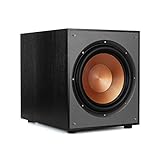
Klipsch R-120SW
- 12 inch high excursion Imp woofer
- 116 dB max output
- 29 Hz to 120 Hz response
- Solid wood cabinet
The PSW10 takes the top slot because it is the only sub here that almost nobody returns. The R-12SW is the raw value play if you want 12-inch cone area, and the R-120SW is the one to beat if you have a proper media room and care about headroom more than footprint.
All 8 Best Subwoofers Under 500 at a Glance (October 2026)
| Product | Specifications | Action |
|---|---|---|
| Polk Audio PSW10 |
|
Check Latest Price |
| Klipsch R-12SW |
|
Check Latest Price |
| Klipsch R-120SW |
|
Check Latest Price |
 Audioengine S8 Audioengine S8 |
|
Check Latest Price |
 Polk Audio Monitor XT12 Polk Audio Monitor XT12 |
|
Check Latest Price |
 Yamaha NS-SW100BL Yamaha NS-SW100BL |
|
Check Latest Price |
 Klipsch R-100SW Klipsch R-100SW |
|
Check Latest Price |
 Fluance DB10W Fluance DB10W |
|
Check Latest Price |
Two naming notes before the individual write-ups. The Klipsch R-12SW and R-120SW are different cabinets with different drivers despite the similar names, and both are 12-inch models. The Polk PSW10 and the Polk Monitor XT12 share a brand but nothing else, apart from a grille that looks similar in a dark room.
1. Polk Audio PSW10 – Best Overall Subwoofer Under 500
Polk Audio PSW10 10″ Subwoofer, Big Bass Compact Design, Up to 100 Watts
10 inch Dynamic Balance woofer
50W RMS built-in amp
40-160 Hz response
Phase toggle
Pros
- Compact 14.5 inch tall cabinet suits small and mid rooms
- Clean balanced output at higher volume without audible distortion
- Phase toggle makes pairing two subs straightforward
- Works with receivers over RCA or speaker-level
- 15413 owner ratings averaging 4.7 stars
Cons
- Boomy character when level is pushed
- Modest amplifier limits headroom in large rooms
- Limited reach compared with 12 inch rivals
I have the PSW10 on the shortlist of gear I recommend to anyone with a soundbar or a pair of bookshelf speakers and a complaint about missing bass. At 14.5 inches tall and about 26 pounds on the listed dimensions, it disappears next to a sofa in a way that no 12-inch cabinet here does. The 10-inch Dynamic Balance woofer fires forward and the port is directed out of the front panel, which means you can push it against a wall without losing everything.
The amplifier is rated at 50 watts RMS with 100 watts peak, and that number matters more than it looks. It is honest marketing by this industry’s standards, because plenty of competitors quote peak figures as if they were continuous. You will not push this box to cinema-explosion levels, but for music at normal living-room volume and for the midbass layer under dialogue, the headroom is real. Reviewers repeatedly report clear, balanced output without obvious distortion, which is the part you actually live with.
Setup takes two minutes. You get line-level RCA inputs and speaker-level spring clips, so it works with an AV receiver sub output, an amplifier with no dedicated sub jack, or an older system with pre-outs. The crossover control sweeps continuously from 80 to 160 Hz instead of clicking between fixed steps, and the phase toggle flips polarity, which is the single most useful control here if you ever run a pair. Warranty is five years on the cabinet and driver, three on the amplifier.
Frequency response is listed at 40 to 160 Hz within 3 dB, and the grilles detach if you want the drivers on show. Frequency response figures from manufacturers are measured in an anechoic chamber, so treat them as a guide to how the bass is tuned rather than a promise about your room. Boundary loading against a wall will add low-frequency gain the spec sheet knows nothing about.
What you get for the money here
You get a 10-inch driver, a 50-watt amplifier, a variable crossover, a phase toggle and a five-year warranty in a cabinet that is easy to place. The listed specifications also note 8 ohm impedance, which matters if you are wiring two subs in parallel through a receiver with limited speaker-level power.
It is worth knowing that 15413 owner ratings sit behind this pick, and 81% of them are five stars. That is the kind of sample size that makes a recommendation safe, because a bad batch or a manufacturing shift would show up across thousands of reviews instead of hiding behind a dozen.
Who it suits and who it does not
This is the sub to buy for a bedroom, a flat, a home office, or a mid-size living room where you listen to music and watch films in the evening. It is also the safest recommendation I can make for someone pairing a sub with a soundbar, because the crossover range covers the 80 Hz that soundbars usually set.
Skip it if you have an open-plan living-dining space with seating more than four rows deep and expect to run an action film at reference level. Reviewers report boom on high settings, and the 50-watt amplifier simply runs out of headroom there. Buy the Klipsch R-120SW or run two PSW10s instead.
2. Klipsch R-12SW – Best Value 12-Inch Subwoofer Under 500
Klipsch R-12SW 12″ 400W Subwoofer
12 inch copper-spun woofer
400W all-digital amplifier
29 Hz reach
Auto power-on
Pros
- Highest average rating in the group at 4.8 stars from 5749 ratings
- 400W of dynamic power fills medium and large rooms
- Front-firing port keeps the bass clean at volume
- Works with single LFE or dual LFE pre-outs
- Brushed black veneer cabinet looks the part
Cons
- Cabinet is large and reads as furniture
- Thin supplied RCA cable can hum
- Two-prong ungrounded power cord
- A minority report driver rattle after a few months
- Boomy until crossover and gain are set
The R-12SW is the one I tell people to buy when they want 12-inch cone area and refuse to stretch the budget. The 12-inch copper-spun front-firing woofer moves a lot of air, and the all-digital amplifier is rated at 400 watts of dynamic power, which is a genuinely useful amount of headroom for film soundtracks. The listed manufacturer figure of 29 Hz tells you this is a sub that works below the frequency most people can hear and can feel.
Reviewers are near-unanimous on sound quality for the money, describing a warm, rattle-free driver that stays clean at high volume. They are equally consistent about the caveats. The cabinet measures 20 inches in both depth and width with a height of 17.7 inches, so plan the floor space before you buy. And out of the box, before you set the crossover and gain properly, plenty of owners describe it as boomy or muddy.
Connections are Line and LFE, which covers every modern receiver including dual subwoofer pre-outs. Crossover and phase controls sit on the rear panel. The sub powers on automatically when it detects a signal and shuts down after 20 minutes of silence, a small feature that matters if you care about leaving it on all day. Warranty is two years, which is the shortest in this group.
One practical warning from owner feedback: replace the included RCA cable. Reviewers report hum with the thin cable in the box and no problems once a shielded cable is fitted. A minority also report a driver rattle developing after a few months, though in the cases described a replacement woofer resolved it. That is a minority, not a trend, but it is worth keeping the packaging.
Why the 12-inch cone matters at this price
A 12-inch driver moves roughly 50% more air per stroke than a 10-inch of comparable excursion, and that is why 12-inch models feel bigger in a room at the same volume setting. It shows up most clearly in midbass, the 40 to 60 Hz band that carries kick drums and the weight of a film score. The R-12SW’s 29 Hz specification puts real weight below that too.
The trade is footprint and, at times, accuracy. A bigger cone that is being pushed to its limits on a long action sequence can bloat, and the 20-inch-square cabinet is hard to tuck away. Both are manageable if you have the floor space.
Where this pick is the wrong choice
It is the wrong pick for a small room, where 12 inches of cone near a sofa or desk is more than most people want, and for anyone who needs a sub with speaker-level inputs to work with an older amplifier. The PSW10 handles both of those cases better.
It is also the wrong pick for pure music listening, where the more accurate option below is a better long-term partner. This is a home theater sub that will not embarrass you on records, but it is not trying to be an instrument.
3. Klipsch R-120SW – Best Subwoofer Under 500 for Home Theater
Klipsch R-120SW Subwoofer, Black
12 inch high-excursion Imp woofer
200W continuous, 400W peak
116 dB max output
Pros
- 116 dB maximum acoustic output gives real movie headroom
- High-excursion driver with a stated 29 Hz lower limit
- Wood cabinet and rear port reduce panel rattle
- Timbre-matches the rest of the Klipsch Reference line
- Five years on the woofer
Cons
- Bulky footprint for small rooms
- Output can overwhelm a small space without careful setup
- 400W peak figure overstates continuous power
This is the pick for a dedicated media room, and it is the step up from the R-12SW in the two places that matter for film: excursion and cabinet. The 12-inch high-excursion spun-copper Imp woofer is rated to a stated 116 dB maximum acoustic output, and the enclosure is real wood with a bass-reflex port at the rear rather than a plastic shell. That combination is why it stays composed on a long, loud sequence where a smaller driver would audibly strain.
Amplification is 200 watts continuous with 400 watts peak, so treat the headline 400W figure as the short burst ceiling rather than what the amp can sustain indefinitely. Frequency response is listed from 29 to 120 Hz within 3 dB, the same lower limit as the R-12SW but with a firmer top end defined by the low-pass control. Owners describe exceptional output for the money and a clean, powerful low end.
The measurements come to 19.2 inches deep, 14 inches wide and 16.5 inches high, at 31 pounds. That is a real box, and it is narrower than the square-footprint R-12SW, which helps if you are placing it beside a media unit rather than in a corner. Warranty is five years on the woofer and two on the amplifier, the same split the brand uses across the Reference line.
If your main speakers are Klipsch, the tonal match is already handled. It supports 5.1 and 7.1 channel systems, so it slots into a conventional surround setup with a receiver handling the low-pass crossover. Note that the two reviews themes that recur are about placement, not about faults: people who love it in a proper room and dislike it in a small one.
When the 116 dB figure actually helps you
Maximum acoustic output matters when your room is treated and calibrated, and your main speakers are not wasting amplifier power trying to produce frequencies they cannot reproduce. In that setup, a sub that can hit 116 dB means the receiver can set the crossover higher, where the sub does less of the work and distorts less, and the whole system gets cleaner rather than louder.
In an untreated living room, that headroom shows up differently. It means you can keep the level up during a long film without the sub being the thing that falls apart first. It does not fix room modes, and no sub at this price does.
Who should pick something else
Apartment dwellers and anyone with a small or mid-size living room should look at the PSW10 or the Audioengine S8. A 31-pound, 19-inch-deep cabinet in a tight space fights you every time you want to move furniture, and the extra output is output you may not be permitted to use late at night anyway.
Musicians should also weigh the alternatives. The R-120SW optimises for impact and headroom, not for a flat response that lets you judge a low end accurately. If you are mixing or critical listening, the sealed and controlled options below serve you better.
4. Audioengine S8 – Best Compact Subwoofer Under 500 for Small Rooms
Audioengine S8 Powered Subwoofer – 250W Wireless-Ready 8-Inch Bass Speaker
250W powered amplifier
8 inch down-firing driver
11.26 inch cube
W3 wireless kit ready
Pros
- Compact cube that fits under a desk or beside a sofa
- Punches well above what an 8 inch driver suggests
- Down-firing ported design gives tight bass rather than boom
- Abundant rear controls for crossover and level
- Ideal partner for compact bookshelf and desktop speakers
Cons
- High gain can overload some source components
- Bright orange standby light cannot be switched off
- Pointed plastic feet can scratch hard floors
- Not built for large rooms or very deep bass
The S8 is the sub I recommend to anyone whose complaint is that everything good in the room is too big. It is an 11.26-inch cube in white, weighing enough to stay put and light enough to move with one hand, and the down-firing 8-inch driver with a rear port gives bass that is tight rather than boomy. For a bedroom, a study, a desk setup, or a flat where floor space is a premium, nothing else on this list is close.
Owners call it a cult favourite for desktop and bookshelf systems, with 86% of 777 ratings at five stars. Reviewers consistently note that it produces far more than its driver size suggests, and that it is unusually well behaved in a small room. Signal-to-noise ratio is listed at 95 dB, which is respectable and helps in a quiet listening position.
It sleeps automatically when there is no signal, and it can work cable-free with the Audioengine W3 wireless subwoofer kit, which is a genuine advantage if you cannot run a cable to a rear speaker. It can also act as a bass shaker with small bookshelf or desktop speakers, giving a stereo pair genuine low-end weight. The stated 27 Hz frequency figure is optimistic for a 250W 8-inch design, so read it as tuning intent rather than promise.
Two practical issues. The gain is high enough that some source components overload, and an external attenuator fixes that in a minute. The orange standby light cannot be disabled without powering the unit down, which matters in a dark bedroom. The pointed feet are worth padding if you have hard wood.
How an 8-inch sub fits a small room
Small rooms excite their own low-frequency modes, and a bigger sub makes that worse, not better. A long sealed-ish or gently ported 8-inch has less low-frequency output to excite, so it integrates faster and is far easier to set up with a fixed room volume. In a room under roughly 150 square feet, that is the difference between a sub you can tune in ten minutes and one you fight.
The other benefit is crossover matching. Compact speakers usually have their own limitations from around 80 Hz upward, so a sub that stops at the low-pass point blends seamlessly instead of creating a seam where the sub takes over.
Where it falls short
Do not buy the S8 for an open-plan space or a dedicated cinema room, expecting the 250 watts to cover seating more than a few rows back. Reviewers are clear that it is not designed for large rooms or for very deep sub-bass, and they note the high gain that can clip a quiet source component.
It is also not the sub for infrasonic material. If you want to feel the opening of a film rather than hear it, the R-120SW is a fundamentally different product, larger and heavier and built to move much more air.
5. Polk Audio Monitor XT12 – Best Subwoofer Under 500 for Music
Polk Audio Monitor XT12 12″ Powered Subwoofer, Deep Bass (Midnight Black)
12 inch long-throw woofer
100W Class A/B amp
24 Hz reach
80-160 Hz variable crossover
Pros
- Clean accurate bass that does not muddy the soundstage
- Tight controlled low end for both films and music
- Banded rigid MDF cabinet with removable grille
- Line-level RCA
- unfiltered LFE and binding post inputs
- Timbre-matches the rest of the Monitor XT line
Cons
- 39 pound cabinet needs planned placement
- Crossover bottoms out at 80 Hz
- Overpowered for small rooms
- No front-panel power indicator
Of the eight, this is the one whose owner reviews read most like a music review. The Monitor XT12 pairs a long-throw, high-excursion 12-inch Dynamically Balanced woofer with a critically braced rigid MDF cabinet, and owners describe clean, accurate bass that adds depth without muddying the soundstage. That is the specific quality a subwoofer needs if you are listening critically, because a sub that adds its own colour destroys the stereo image above it.
The amplifier is 100 watts of Class A/B, reaching down to 24 Hz according to the manufacturer, which is the lowest stated figure in this group. Owners describe a tight, controlled low end that works for both movies and music without mode switching, and an easy integration process with quick calibration. At 270 ratings and 4.6 stars, it is the newest and least reviewed sub here, so read the individual comments rather than the average alone.
Inputs are the most complete in the group: line-level RCA, unfiltered LFE, and nickel-plated 5-way binding posts for speaker-level connection. That means it works with a receiver, a stereo amplifier, or a legacy system without an adapter. The variable crossover sweeps from 80 to 160 Hz and there is 0 or 180 degree phase polarity control. Warranty is five years, and impedance is 4 ohm, so check your amplifier’s rating if you plan to run two.
The one crossover limitation owners mention is that the control stops at 80 Hz, which overlaps with the Monitor XT bookshelf speakers. If you own those, set the crossover on your receiver instead and let the sub run wide, or you will create a doubling effect right where the two speakers overlap. If you have towers that bottom out around 30 Hz, a higher crossover setting is the better match.
Why a sub matters more for music than most people expect
Music is where a subwoofer’s mistakes show up first. Kick drums and bass guitar live in the band a sub handles, and a sub that adds output at the wrong frequencies makes a mix sound fat and vague without anyone being able to say why. A controlled, accurate sub fixes that rather than adding to it, which is why the Monitor XT12 reads well in owner comments about music.
It is also the natural partner for the small bookshelf speakers most people actually own. If your main speakers stop cleanly around 80 Hz, a sub that can stay flat and controlled in that region simply completes the spectrum instead of doubling it.
The practical problems you should know about
At 39 pounds and 18 inches wide, this is the heaviest box on the list, and that is a genuine nuisance in a rented flat. It is also more output than many small rooms want, which owners report as an issue when they first connect it. If you are in a compact space, the PSW10 or the S8 will serve you better and take up a third less floor area.
The 4 ohm impedance is worth noting too. It draws more current than an 8 ohm sub of the same wattage, and some older integrated amplifiers will not drive it well on speaker-level inputs. Use the RCA inputs if you can.
6. Yamaha NS-SW100BL – Best Subwoofer Under 500 for Soundbar Setups
Yamaha Audio 10″ 100W Powered Subwoofer – Black (NS-SW100BL)
10 inch cone woofer
100W YST II amplifier
Twisted flare port
Single RCA input
Pros
- Clear tight bass from the twisted flare port
- Reliable build from a long-established audio brand
- Simplest setup on the list with one volume knob
- Owners have measured output above the 100W label
- Good match for soundbar and all-in-one systems
Cons
- No onboard crossover or speaker-level inputs
- No automatic standby
- Needs a capable receiver for correct integration
- Modest reach below 30 Hz
The Yamaha is the least fussy subwoofer in this roundup, and for a lot of people that is the deciding factor. There is one volume control and one RCA input. That is the whole rear panel in practical terms, and if your soundbar has a subwoofer output you plug it in and turn the knob. There is no crossover to set wrong, because the subwoofer output in your soundbar or receiver handles that instead.
The 10-inch cone is driven by the Advanced YST II active servo amplifier, and the twisted flare port is the design detail reviewers credit for the clear, tight low end. Owners describe bass that is clean rather than window-shaking, which is exactly the character you want behind dialogue in a mixed-content system. At 26.5 pounds in a 17.5-inch cube, it is also fairly substantial for what it does.
Owners have measured roughly 65 watts RMS and 120 watts peak on their units, above the 100-watt label, which is a good sign about build consistency. Signal path is wired RCA, and there is no wireless option in the box. Warranty is two years, the shortest alongside the Klipsch R-12SW.
The catch is that with no onboard crossover, integration is entirely in the hands of whatever you plug it into. If your receiver or soundbar has no subwoofer output and no adjustable crossover, this is the wrong sub, because the Yamaha cannot be compensated for afterwards. Owners also report weak midbass or cancellation when the crossover and phase are set incorrectly, which is easy to fix once you know it is the cause.
When simplicity beats flexibility
There is a real category of buyer who wants to add bass to a soundbar and has no interest in menus. If that is you, the Yamaha removes every wrong setting you could make. The subwoofer output on a soundbar typically handles crossover and level, and the Yamaha’s own volume control is the only thing you need to learn.
It also suits anyone pairing with a compact hi-fi system where the amplifier has a pre-out but no dedicated subwoofer menu, and where a long setup session is the last thing you want to spend an evening on.
Where the trade-offs show up
Owners report modest reach below 30 Hz, so this is a sub that adds weight and midbass rather than sub-bass. It is not going to reproduce the low effects that a 12-inch model renders as physical pressure, and it is not the right tool for a large room.
It also has no automatic standby, so it stays on until you switch it off at the wall. In a living room where the sub is visible, that is a small irritation. For anyone who wants to fine-tune a response with parametric EQ, look at the compact sealed options instead, where the control surface is on the sub rather than on your receiver.
7. Klipsch R-100SW – Best Budget Subwoofer Under 500
Klipsch R-100SW 10″ Subwoofer, Incredibly Deep Bass and an All-digital Amplifier,14 5″ x 12 5″ x 16 4″
10 inch spun-copper IMG woofer
150W continuous, 300W peak
Auto power-on
Pros
- Lowest cost pick here and still rated 4.7 stars
- Deep clean bass with less boom than typical budget subs
- Solid wood cabinet at 26 pounds
- Rear crossover gain and phase controls fit almost any system
- Fits under a desk for nearfield listening
Cons
- Needs a high crossover setting to avoid boomy midbass
- 300W peak is not enough for very large rooms
- Some owners report woofer rattle after long high-volume use
- Requires a short break-in period
The R-100SW is the recommendation for anyone who wants a real wood cabinet and a proper 10-inch driver without spending much. It comes in at 26 pounds, roughly the same as the Yamaha but with a wood enclosure rather than paper, and its 10-inch front-firing spun-copper IMG woofer is driven by an all-digital amplifier rated at 150 watts continuous and 300 watts peak. The 3381 ratings average 4.7, with 86% at five stars.
What reviewers like most is that it is less boomy than typical budget subwoofers, which is a direct result of the wood cabinet and the rear-firing bass-reflex design. What reviewers complain about is usually the same thing: it wants a crossover setting in the 90 to 100 Hz region to sound its best, and it firms up after a short break-in period. Both are setup details, not faults.
It measures 14.5 inches by 12.5 inches by 16.4 inches, which is small enough to slide under a desk, and buyers on the enthusiast forums pair it with Klipsch main speakers specifically for nearfield listening. Frequency response is listed at 32 to 120 Hz within 3 dB. The rear panel carries volume, low-pass crossover and 0 or 180 degree phase control, and the sub powers on automatically when it detects a signal. Warranty is five years on the woofer and two on the amplifier.
One note on the listed figures: the product page shows competing dimension sets, so measure the cabinet rather than the shipping box. The subwoofer itself is the smaller of the two, and the difference matters if you are planning a tight corner placement.
How to get the sound right on the first afternoon
Start the low-pass crossover at 90 Hz rather than the usual 80 Hz, and turn the sub level down before you turn it up. Run your receiver’s room correction if it has any, then set the sub level again afterwards, because room correction often changes the level you had. If the midbass sounds like a growling thump rather than music, the crossover is too low, and that is the single most common complaint about this model.
Leave it running at moderate level for a few days before you judge it. Owners consistently describe the bass firming up after break-in, and it is an easy thing to be unfair about on day one.
Who should buy something bigger instead
If you have a large open-plan room, or a dedicated theatre with three or more rows of seating, 300 watts of peak power is not enough headroom. The R-120SW exists for exactly that case, and the difference in output is not marginal on a long action sequence.
There is also a strong case for buying two of these rather than one large sub at the same total spend. Forum regulars consistently make that argument, and it is the single most-repeated piece of community advice in this category. Two smaller subs spread the energy across a room and smooth out the nulls a single one leaves behind, which is a harder-won improvement than raw power.
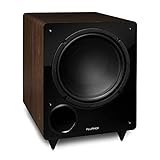
8. Fluance DB10W – Best Looking Subwoofer Under 500
Fluance DB10W 10-inch Low Frequency Powered Subwoofer for Home Theater (Natural Walnut)
10 inch long-throw driver
120W amplifier
Engineered MDF walnut cabinet
Auto power-on
Pros
- Natural walnut finish that blends into a living room
- Clean unobtrusive bass without rumbling boom
- Front-firing port allows placement near a wall
- Quick setup with a standard 80 Hz crossover
- Two year parts and labour warranty
Cons
- Lowest rated pick here at 4.4 stars
- Modest 120W output and limited reach below 35 Hz
- Backplate runs hot above mid volume
- Bevelled logo rattles against the grille
- Tight binding posts suit bare wire only
The DB10W is the only walnut-finish subwoofer in this roundup, and in a room where the sub has to live in plain sight that is not a trivial advantage. The cabinet is engineered MDF with a finely tuned front-firing bass port, so you can push it near a wall without losing the low end, and at 24.7 pounds it has the same solid feel as the wood boxes above despite being a good deal smaller.
The 10-inch long-throw driver is described as delivering deeper excursion and controlled linearity, and owners report clean, unobtrusive bass that avoids the rumbling boominess of cheaper subs. It sets up quickly at a standard 80 Hz crossover, and it powers on automatically through signal detection. Buyers who pair it with Fluance speakers rate it highly on matched styling.
It is also the lowest-rated product in this group, at 4.4 stars from 351 ratings with 74% five stars, and that gap is worth explaining. The complaints cluster on output and on small build details: 120 watts is modest, the backplate runs warm above mid volume, and the bevelled Fluance logo rattles against the grille. Binding post terminals are tight and suit bare wire only, so plan your cable accordingly.
Those are real limitations rather than quirks of taste, and they are the reason this is eighth rather than higher. The dimensions are 15.7 inches deep, 11.9 wide and 16 high, which is the most compact full-size cabinet here, and the warranty is two years on parts and labour.
When looks decide the purchase
Some rooms simply will not accept a black fabric grille on a black box. If your media console is walnut, oak or white, the DB10W disappears into the joinery in a way none of the other seven can, and that removes a genuine obstacle to actually deploying a subwoofer rather than leaving it in the box.
It is also a reasonable choice if you are buying for a mid-size room and your listening leans toward music rather than effects-driven film. Unobtrusive, clean and controlled output is a better default for everyday use than maximum level.
Where to buy something else
If you want deep sub-bass, the stated 120 watts and the limited reach below 35 Hz rule it out. For a media room where you will watch action films at high level, the R-12SW or R-120SW delivers meaningfully more, and you accept a larger, plainer cabinet for it.
The heat build-up in the backplate is worth knowing about in a closed cabinet or a small media unit, and the tight terminals will annoy anyone used to banana plugs. It is a design-led choice, and the output is the price of that.
How to Choose a Subwoofer in This Price Range
Below the 500 ceiling you will not find infrasonic monsters, and nobody in this category is pretending otherwise. What you can get is clean, honest, low-distortion output that integrates with a normal system, and the difference between a good one and a bad one is almost always setup and cabinet quality rather than raw specifications. At this budget, enclosure rigidity and a real crossover beat extra amplifier watts every time.
Sealed, ported, or passive radiator
A ported enclosure uses an opening to let air move, which produces more output for a given driver size and is the reason most subwoofers under this ceiling are ported. A sealed enclosure traps air behind the cone, which tightens the bass and reduces distortion but costs output. A passive radiator is an unpowered extra cone that behaves like a port without the tuning problems. For movies and low output levels, ported wins. For music, nearfield listening and shared walls, sealed or a well-behaved ported design is calmer.
How big a driver does your room need?
Match the driver to the room rather than to your hopes. Under roughly 150 square feet, an 8-inch is usually the right call because it integrates quickly and excites fewer room modes. Between 150 and 300 square feet, a 10-inch is the sweet spot. Above 300 square feet, or in an open-plan space where seating spreads past three rows, a 12-inch is worth the floor space. Going bigger than the room asks for makes bass boomier rather than deeper.
What actually matters in the specifications
Low-frequency extension tells you how deep it goes and is the number to compare first, though manufacturer figures are measured in anechoic chambers and are always flattering. Output specifications in dB are far more useful than wattage, because wattage marketing measures different things on every brand page. Distortion figures below 10% THD are the point where a sub is adding anything to the low end. Connections matter more than people expect: look for LFE, line-level RCA and speaker-level inputs, and check your amplifier supports the impedance. If you are working from measurements rather than marketing, the measurement-led approach used by editorial roundups is worth reading before you spend.
Setting the crossover and placing the subwoofer
Start at 80 Hz if your main speakers are floor-standing towers, and go to 90 or 100 Hz if they are small bookshelf speakers. Phase is the next control to touch: if bass thins out as you move around the room, flip the 0 or 180 degree switch. Then work on placement rather than settings, because position changes more than any dial. Common mistakes include pushing the sub into a corner and expecting less boom, hiding it behind the sofa, running the crossover far too low, and skipping room gain calibration if your receiver offers it.
One subwoofer or two?
Two smaller subs for the same money usually sound better than one, and community opinion in the home theater forums is consistent on that point. Two subs spread energy across the room, fill the nulls a single sub creates, and each one is driven less hard, so both stay within their limits. The practical maximum before returns disappear is about four. If you are covering a wide seating area, run two of a mid-size model instead of stretching for one large box you cannot afford to place well.
Waiting for a sale, or buying now
Budget subwoofer prices swing hard and brands discount on predictable cycles, so waiting is a legitimate strategy rather than a myth. What you lose by waiting is the chance to run the sub at home and decide it is wrong for your room. If you are considering desktop and studio setups, our picks for studio monitor subwoofers and soundbars that include a subwoofer cover the cases where accuracy and simplicity matter more than output.
Frequently Asked Questions
What is the best subwoofer under 500?
The Polk Audio PSW10 is our pick for most people. It pairs a 10-inch woofer with a 50-watt RMS amplifier, runs from 40 to 160 Hz, offers both RCA and speaker-level inputs, and has more owner ratings than anything else in this group. If you want 12-inch output for a larger room, step up to the Klipsch R-12SW or R-120SW instead.
What hits harder, 10s or 12s?
A 12-inch subwoofer hits harder, because a larger cone moves substantially more air per stroke, which shows up most clearly in the 40 to 60 Hz band that carries kick drums and film weight. The catch is size and room fit. In a room under roughly 150 square feet, a 10-inch model often sounds better and integrates faster, because a bigger sub just excites more room modes.
Does 2 subs sound better than 1?
Usually yes. Two subs spread energy across a room, fill the nulls a single subwoofer leaves behind, and each one is driven less hard, so distortion stays lower. Community opinion in home theater forums is consistent on this point. The practical maximum before returns fade is about four subs. If your seating is wide, two mid-size models beat one large box you cannot place well.
What are common subwoofer placement mistakes?
The four most common mistakes are pushing the sub into a tight corner and expecting less boom, hiding it behind the sofa, running the crossover much too low, and never running your receiver’s room correction. Placement changes more than any dial on the rear panel. Start at 80 Hz for towers and 90 to 100 Hz for bookshelf speakers, then move the cabinet before you touch anything else.
What is the best subwoofer for the money?
Value depends on your room and your main speakers. For most people the Polk Audio PSW10 is the strongest all-round choice at this tier. For a small room or a desktop system, the Audioengine S8 is a better fit than any larger model. For critical listening, the Polk Monitor XT12 is the most accurate. Buy based on where the sub will live, not on the largest driver size.
If you are building out a car system rather than a home one, that is a separate category with separate drivers and we have covered it separately, along with the amplifiers that power them and the shallow-mount options for trucks.
Bottom Line: The Best Subwoofer Under 500 for You
The Polk Audio PSW10 is the best subwoofer under 500 for most homes in 2026, because it fits, it integrates with any receiver, and a decade of owner feedback says it keeps working. Choose the Klipsch R-120SW if you have a real media room and want headroom, the Klipsch R-12SW if you want 12-inch output without the footprint, the Audioengine S8 if floor space is tight, and the Polk Monitor XT12 if music is half your listening.
Pick this one if you are starting from nothing: the PSW10, matched to whatever speakers you already own. Pick two of a smaller model if you have more than two rows of seating. Do not buy a sub to compensate for weak main speakers, because it will expose them rather than fix them. If you want moving parts for a dance floor instead, our DJ subwoofer picks cover that side.