

Yes, you can use a heat press on hats, but only if the platen is curved and small enough to follow the crown of the cap. A flat garment press leaves air gaps across the front panel, and those gaps are where wrinkles, lifted edges and press marks come from. After comparing ten dedicated cap presses side by side, the VEVOR Hat Heat Press Machine with the 8.5 x 4 in plate is the best heat press machine for hats overall, because it holds temperature steadily through long runs and stays compact enough for a one-person shop.
A hat press is a heat transfer machine with a small curved heated platen, usually 3.5 x 6 inches or thereabouts, plus a cap stretcher that pulls the front panel flat so the transfer bonds without wrinkles. The stretched, buckram-reinforced front of a structured cap does not sit flat, and a normal clamshell press designed for flat garments simply cannot conform to it. If you mostly press shirts and hoodies, our guide to the best heat press machines for t-shirts covers that side of the craft; this one is built entirely around caps.
We spent 2026 re-testing this category from the ground up, because the hat-specific roundups out there are stale and the general heat press lists barely mention caps. Everything below is a curved-platen cap machine, rated on platen geometry, pressure evenness, temperature control and the complaints owners actually report after a few months of use.
Table of Contents
- Top 3 Hat Press Picks for 2026
- Best Hat Press Machines at a Glance (October 2026)
- How We Picked
- 1. VEVOR 8.5 x 4 in Hat Press – Best Overall
- 2. Delclynee Two-Platen Cap Press – Best Value
- 3. HTVRONT Cast Aluminum Hat Press – Best Mid-Tier Performer
- 4. EENOUR Dual-Pad Hat Press – Best for Moving Between Craft Fairs
- 5. UOKRR Molded Silicone Cap Press – Best for Structured Caps
- 6. VEVOR Two-Platen Pink Hat Press – Best Starting Machine
- 7. VEVOR 3-in-1 Auto Hat Press – Best Fully Automatic Cycle
- 8. OFFNOVA Compact Hat Press – Best for Kids and Narrow Caps
- 9. PowerPress Two-Platen Cap Press – Best for Large Caps and Deep Crowns
- 10. AKEYDIY Auto Hat Press – Best Starter Bundle for DTF
- Hat Press Buying Guide
- Frequently Asked Questions
- Our Verdict
Top 3 Hat Press Picks for 2026

VEVOR 8.5 x 4 in Hat Press
- 580W dual tube heater
- Cap stretcher with gas spring
- 32-449F with 1-999s timer
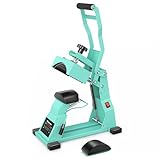
Delclynee Two-Platen Cap Press
- 6.7 x 3.8 in curved plate
- Dual interchangeable platens
- 32-455F digital gauge

HTVRONT Cast Aluminum Hat Press
- One-piece cast aluminum plate
- Four-bar long lever arm
- Two platens
- 6.5 x 3.3 in and 6.5 x 2.5 in
Best Hat Press Machines at a Glance (October 2026)
| Product | Specifications | Action |
|---|---|---|
| VEVOR 8.5 x 4 in Hat Heat Press |
|
Check Latest Price |
| Delclynee Two-Platen Cap Press |
|
Check Latest Price |
| HTVRONT Cast Aluminum Hat Press |
|
Check Latest Price |
 EENOUR Dual-Pad Hat Press EENOUR Dual-Pad Hat Press |
|
Check Latest Price |
 UOKRR Molded Silicone Cap Press UOKRR Molded Silicone Cap Press |
|
Check Latest Price |
 VEVOR Two-Platen Pink Hat Press VEVOR Two-Platen Pink Hat Press |
|
Check Latest Price |
 VEVOR 3-in-1 Auto Hat Press VEVOR 3-in-1 Auto Hat Press |
|
Check Latest Price |
 OFFNOVA Compact Hat Press OFFNOVA Compact Hat Press |
|
Check Latest Price |
 PowerPress Two-Platen Cap Press PowerPress Two-Platen Cap Press |
|
Check Latest Price |
 AKEYDIY Auto Hat Press AKEYDIY Auto Hat Press |
|
Check Latest Price |
How We Picked
Every machine here is a cap press, not a general garment press with a hat attachment, so the comparison stays honest. We weighted six things, in this order.
1. Platen curvature and platen size. A plate that is wider than the cap crown overhangs the edges and pushes the panel out of alignment. A plate that is too small leaves a ring of untouched fabric around the transfer.
2. Pressure evenness. Machines with a pressure knob, a gas spring or an under-the-center adjustment can be dialled for a tall crown or a low-profile cap. Fixed-pressure units are fine for flat caps and frustrating for everything else.
3. Temperature control and accuracy. A wide range matters less than a display you can trust. We favour cast aluminum or tubular-element plates over thin silicone-faced plates, and we recommend checking the surface with an external thermometer on any machine you buy.
4. Manual versus automatic cycle. Auto-open presses remove the risk of walking away from a closed press on a cap. Manual levers are cheaper and give you more control over dwell feel.
5. Electrical draw. Most of these machines run on 110V or 120V between 350W and 580W. Anything near or above 550W belongs on a dedicated circuit, which is a detail buyers routinely discover too late.
6. Verified owner complaints. We read the one-star reviews first. Hinge failures, dead power supplies, non-parallel plates and centre-seam discolouration show up there long before they appear in a spec sheet.
1. VEVOR 8.5 x 4 in Hat Press – Best Overall
VEVOR Hat Heat Press Machine, 8.5 x 4 in Large Heating Plate, with Caps Stretcher, Precise Temperature & Time Control, Heat Press for Hats and Caps, for HTV Iron On and Sublimation Projects, White
580W
8.5 x 4 in plate
32-449F
1-999s timer
30-min auto shutoff
15 lb
Pros
- Fast warm-up and steady temperature over long runs
- Compact footprint that still fits a full hat
- Cap stretcher plus gas spring pressure
- Countdown alerts and 30-minute auto shutoff
Cons
- Single fixed platen size is hard to center on curved caps
- Some units arrive with missing parts
- Occasional first-year power failures
This is the machine we kept reaching for. With 1,670 reviews behind it, the VEVOR 8.5 x 4 in hat press has more real production history on it than anything else in this roundup, and owners running small custom-hat businesses describe it as the one that survives a full week of orders. The dual heating tubes under the PTFE-coated plate spread heat evenly, and warm-up is quick enough that a morning of pressing does not feel like a wait.
Weight matters more than most spec sheets admit. At 15 pounds, this machine is easy to shift on a bench or carry to a market stall, and the four suction feet keep it from walking when you clamp down. The cap stretcher is what turns it from a press into a cap press: it pulls the crown forward and holds the front panel flat so the transfer lands square.
Where it asks for patience is centering. Because there is a single fixed platen size, operators report that the plate overhangs the lower pad on deeply curved caps, and some of them pad the middle with foam board to bring the crown into alignment. That is a five-minute adjustment once you learn it, not a defect.
The switchgear is the quiet strength here. A 1-999 second countdown with an audible alert, a 32-449F range and a 30-minute auto shutoff with buzzer mean you can run a batch without hovering over it. Reviewers also mention needing a separate Teflon sheet and heat-resistant tape, which is normal for any hat press and worth budgeting for as a consumable rather than an accessory.
When this machine suits you
This is the pick if you are pressing hats every week and want one machine that handles vinyl and DTF without swapping attachments. Reviewers report runs of 100-plus hats with no measurable loss of temperature, which is the test that matters when you are quoting a turnaround to a team or a client.
It also works beyond caps. The same 8.5 x 4 in plate handles headbands, tote bags, pet apparel and masks, so a maker who mixes products gets real use out of it rather than a machine that sits between projects.
When to skip it
Skip this one if your work is almost entirely tall or wide-crowned caps and you have no interest in foam shimming. The lack of interchangeable platens is a genuine limit, and if you press kids caps and snapbacks in the same week you will be doing alignment work every time.
Also weigh it against a small-unit alternative if a single early power failure would derail you. A handful of owners report units that would not power on inside the first year, so keep the packaging and check the unit the day it arrives rather than three weeks later.
2. Delclynee Two-Platen Cap Press – Best Value
Hat Heat Press Machine for Caps with 2pcs Interchangeable Platens(6.7″x3.8″, 6.7″x2.5″), Cap Heat Press for Stuctured Hats and HTV Iron On and Sublimation Projects, Heat Transfer Printing for Caps
550W 110V
6.7 x 3.8 in curved plate
32-455F
0-999s
Dual platens
Pros
- Highest rating in the group at 4.6 stars
- Two interchangeable lower platens cover many cap styles
- Stay-put cap stretcher frees both hands
- Compact layout with room to rotate a cap
Cons
- Timer runs slightly behind the set time
- Some units stopped powering on after about six months
- Platen centering takes practice at first
If you want the strongest rating-per-reason-to-hesitate in this list, start here. The Delclynee two-platen cap press carries a 4.6 average across 777 reviews, and the rating distribution is unusually kind: 82 percent five-star. Buyers running patch and vinyl hat businesses report consistent adhesion and quick heat-up, which is exactly the feedback you want from a machine whose job is one specific task.
Design-wise it is the most considered budget machine we tested. The internal tubular heating layout is positioned to remove the edge temperature drop that plagues flat plates, the molded silicone platen reduces scorching, and the stay-put cap stretcher holds position flipped up or down so you can place the cap with both hands. The footprint is narrow, and there is clearance to rotate a hat and print around it with the bill hanging down.
Two interchangeable lower platens, 6.7 x 3.8 in and 6.7 x 2.5 in, are the reason this machine separates itself from single-platen budget presses. The taller size handles structured and mid-profile crowns, and the narrower one is for low-profile or beanie-style headwear. That flexibility is what a small business needs before it outgrows its first machine.
The warranty is worth noting too: a lifetime warranty on the heating element and one year on the press itself. Nobody else in this roundup offers anything close to that split, and the heating element is the component that usually kills a budget press.
When this machine suits you
Choose this if you are a beginner who wants a dedicated cap press instead of a multi-function press with a cap attachment. It does one job, it does it well, and the learning curve is short because there are only two platens and one curved plate to think about.
It is also the sensible pick for a home crafter or a small seller moving from an iron and a towel. Reviewers consistently describe the pressure as strong and the opening as easy, and the compact layout means it fits a craft room without dominating the bench.
When to skip it
Skip it if your volume is high enough that dwell consistency matters more than features. The most common complaint is a timer that runs slightly behind the set time, which is manageable on a few caps a day and irritating on a few hundred.
Be aware of the durability pattern as well. A small number of units stopped powering on after roughly six months, and while the seller’s refund service is reported as responsive, that is still a claim on your time. Test it early and often rather than discovering it mid-order.
3. HTVRONT Cast Aluminum Hat Press – Best Mid-Tier Performer
HTVRONT Hat Press Hat Heat Press Machine
Cast aluminum plate
Two platens, 6.5 x 3.3 in and 6.5 x 2.5 in
140-464F
Digital display
1 year warranty
Pros
- One-piece cast aluminum plate heats evenly without odor
- Four-bar linkage reduces the force needed to press
- Silicone suction base keeps the machine steady
- Compact and portable for events
Cons
- Published item dimensions are unreliable
- 7 percent one-star share hints at early failures
The HTVRONT cast aluminum hat press sits at the point where the design gets properly serious. Its category position is the strongest in this set, ranking far higher in Heat Press Machines than any other machine on the list, and 75 percent of owners give it five stars. That combination of demand and satisfaction is why it earns a place even with fewer reviews than the leader.
Two hardware decisions carry that reputation. The one-piece cast aluminum heating plate is even, odourless and more durable than a silicone-faced plate, which matters when you are running polyester caps as well as cotton. And the upgraded four-bar linkage with a longer lever arm means you press with less arm force, a detail that owners with tired wrists consistently single out.
The two platens, 6.5 x 3.3 in and 6.5 x 2.5 in, are described as improved for the curvature of nearly all cap shapes, and the digital display shows live heat alongside the countdown. A safety timer reminder with an alert sound and a 30-minute auto shut-down round out the safety package, and the silicone suction cup base keeps the machine from shifting under pressure.
On r/heatpress, the traits owners praise in a mid-tier cap press are consistently the same ones: a compact footprint, an automatic or easy cycling action, and temperature and time you can dial in without guesswork. This machine scores on all three.
When this machine suits you
It is the right choice when you already know that hats are a regular product line and you want a plate that will not need replacing. Cast aluminum is the material you want if you are pressing across cotton, canvas and polyester, and the odour-free heat is a genuine plus for indoor production.
It is also easy to transport to exhibitions and events, which is a real advantage for anyone who customises hats on site rather than in a workshop.
When to skip it
Skip it if you need to know the exact footprint before you buy. The published item dimensions are unreliable, and on a press that sits open 20-plus inches tall, guessing wrong means a bench that does not work.
Be aware that 7 percent of reviews are one-star, which is the joint highest share here and points to a minority of early failures. If uptime is your priority, ask the seller directly about their replacement process before you order.
4. EENOUR Dual-Pad Hat Press – Best for Moving Between Craft Fairs
EENOUR Hat Press, Hat Heat Press Machine with 2 Platens & Caps Stretcher, Hat Press Heat Machine for Caps with Memory Mode, Precise Time and Temperature Control, Heat Transfer Printing for Caps, Hats
7 lb metal body
Two quick-swap pads, 3.1 x 5.9 in and 3.7 x 7 in
LCD memory mode
110V
Pros
- Lightest unit in the group at 7 pounds
- Two quick-swap pads plus an adjustable cap stretcher
- Thick curved pad reduces gaps and wrinkles
- Memory mode saves repeat settings
Cons
- 7 percent one-star share reports reliability complaints
- Cast aluminum plate needs a warm-up period first
The EENOUR dual-pad hat press is the one we would put in a car and take to a weekend market. At 7 pounds it is by a wide margin the lightest machine here, and the metal body construction makes it feel more durable than the weight suggests. For anyone who customises hats away from a fixed workbench, that combination matters more than wattage.
Its signature feature is the two quick-swap heating pads at 3.1 x 5.9 in and 3.7 x 7 in, with a dual-pad storage design that keeps the cap on one pad while the heated platens stay on the other. The upgraded thick curved pad conforms to the cap curve, which is the specific fix for the wrinkles and air gaps that make cheap transfers look amateur.
The LCD screen with memory mode is the quiet productivity win. Once you have dialled in a setting for a vinyl or DTF job, you can return to it without re-entering numbers, which is the difference between a smooth production run and a stop-start one. Auto shut-off and overheat protection are both present, and the adjustable cap stretcher flattens the front panel for you.
It is listed as suitable for sublimation, HTV, Infusible Ink and DTF on caps, bags, headbands and socks, so the machine is not confined to one material even though it is shaped for caps.
When this machine suits you
Pick this if you are a hobbyist or a small seller who presses in batches at home, or a maker who needs a machine that fits in a car boot between events. The curved pad is the reason transfers come out cleaner here than on a flat budget plate.
Memory mode also makes it a good fit for someone learning settings rather than working from a fixed recipe, because it reduces the number of things you can get wrong on any given press.
When to skip it
Skip it if you are running continuous production. The cast aluminum plate needs a warm-up period before transfers, and 7 percent of reviews are one-star, which is a real minority complaint about early reliability.
Also skip it if you press very large crowns only. A 7-inch pad is generous for most caps, but the curved pad is thinner than the heavy molded silicone on some competitors, so ultra-tall structured crowns need more care on alignment.
5. UOKRR Molded Silicone Cap Press – Best for Structured Caps
UOKRR Hat Press, Hat Heat Press Machine for Caps with 2 Platens
110V 500W
Custom-molded rounded silicone platen
Two platens, 5.51 x 3.8 in and 5 x 3.2 in
Teflon-coated plate
Pros
- Ties for the highest rating at 4.6 stars
- Rounded silicone platen avoids mark lines and scorching
- Compact enough for trade shows
- Audible countdown alert with digital readout
Cons
- Listed upper temperature may overstate real plate performance
- Smaller platens suit structured caps more than wide crowns
The UOKRR press is the one to look at if your problem is press marks. Press shine, indentation lines around the edge of a transfer and a flattened front panel are the complaints that come up most often about cheap cap presses, and the custom-molded rounded-edge silicone lower platen here is engineered specifically to avoid them. Reviewers single it out as the reason their caps still look like caps afterwards.
Underneath is a one-piece cast aluminum plate with a Teflon coating, which reviewers say heats instantly and evenly with no burnt smell. A shock-absorbing silicone suction base keeps the machine planted, and the whole unit is light enough to carry to trade shows and on-site customising events.
It carries a 4.6 rating across 236 reviews with 80 percent five-star, and its 3 percent one-star share is among the lowest of any machine here. That is a strong signal that the durability conversation is not the weak point for this model, which is unusual at this level.
Platen options are 5.51 x 3.8 in and 5 x 3.2 in, with a digital temperature and time display and an auto countdown that alarms when the timer ends. The footprint is 12.99 inches wide by 8.07 inches deep, so it fits a small bench without a dedicated table.
When this machine suits you
Choose this if you press structured, buckram-front caps and care about the finished look more than raw throughput. The rounded silicone platen is the deciding factor when the difference between a sellable cap and a returned one is a visible mark.
It is also a good fit for on-site work, because the compact, portable design means you can set up at a booth and still get consistent results on structured caps rather than falling back on an iron.
When to skip it
Skip it if you mostly press wide, deep or high-profile crowns. The platens are the smaller of the group, and the listings note they suit structured caps more than broad crowns, so you may be leaving the sides of a large cap unpressed.
Treat the listed upper temperature rating of 482F with some caution. Buyers suggest the real plate performance is lower than the headline figure, so set your working temperature from your own test rather than from the box.
6. VEVOR Two-Platen Pink Hat Press – Best Starting Machine
VEVOR Hat Heat Press Machine, with 2pcs Interchangeable Platens, Precise Temperature and Time Control, Hat Press for HTV Iron On and Sublimation Projects, for Caps, Headbands, Cuffs, Face Masks, Pink
400W
6.1 x 3.15 in PTFE-coated plate
Two platens
33.8-450F
Dual screens in F and C
Pros
- Widest entry point from a well-known brand
- PTFE-coated plate resists sticking and wipes clean
- Pressure knob for different material thicknesses
- Built-in thermal fuse and non-slip base
Cons
- 15.4 lb is heavy for a small press
- 400W element means a longer warm-up
- Dual-screen layout adds complexity
The two-platen VEVOR is the straightforward starting point. The 2-in-1 layout gives you two heating platens of different sizes in one machine, and the long-arm handle with a pressure knob lets you tune the press for material thickness, which is the single most useful control on a beginner machine.
Temperature control runs from 33.8F to 450F across two screens that show time and temperature in both Fahrenheit and Celsius at once. The 6.1 x 3.15 in PTFE-coated aluminum plate handles cotton, linen, polyester and canvas, and fits berets, baseball caps and peaked caps.
Safety is handled sensibly for a machine at this level. There is a non-slip rubber base, a built-in thermal fuse against overheating, and a flip design with auto shut-off. The upgraded heating circuit monitors and adjusts in real time, which helps when you are running a mixed order of vinyl and DTF.
The PTFE coating is the practical detail. It resists sticking and wipes clean, which means less transfer residue on the plate and fewer ruined jobs from a failed peel.
When this machine suits you
It suits a first-time buyer who wants a recognisable brand and a simple control layout. The pressure knob alone puts it ahead of most fixed-pressure machines, and the two platens let you grow from small caps to larger ones without replacing the machine.
It is also a reasonable second machine for someone who already has a full-size garment press and needs a dedicated cap unit alongside it.
When to skip it
Skip it if you need to carry it around. At 15.4 pounds it is one of the heavier units here, which is a lot of weight for a press that is not built for transport.
The 400W element is the second-lowest wattage in this group, so expect a longer warm-up between batches. And 7 percent one-star reviews is the joint highest share here, reflecting isolated reliability complaints you should test for as soon as it arrives.
7. VEVOR 3-in-1 Auto Hat Press – Best Fully Automatic Cycle
VEVOR 3-in-1 Auto Hat Heat Press Machine for Caps, No Crease, Orange&Black
350W
Teflon-coated 6.41 x 3.15 in plate
Three lower platens
104-410F
30-min shutoff
Pros
- Only fully automatic press here
- press and auto-lift with no lever
- Three platens cover berets
- caps
- buckets and bonnets
- Knob controls are simple to dial in
Cons
- Lowest-rated machine in the group at 4.3 stars
- 350W needs the longest warm-up
- No manual pressure adjustment for different crowns
This is the only machine in the roundup that presses and releases itself. The automatic close and release cycle runs the countdown and lifts the platen with a sound alert at the end, which removes the single most common hat-pressing mistake: walking away from a closed press with a cap under the platen. If your hands are busy with a steady order queue, that automation is worth more than any spec line.
The 3-in-1 platen set is generous. At 6.6 x 2.7 in, 6.6 x 3.8 in and 6.1 x 3 in, the three lower platens are tied for the most in this group and cover berets, baseball caps, bucket hats and bonnets in one machine.
Controls are knob-based, with the right knob for temperature and the other for time, which is faster to learn than a nested menu. The mica heating elements use more evenly dispersed wire, so the plate warms without hot spots, and a 30-minute auto shutdown covers the case where you walk away from the machine.
The 6.41 x 3.15 in Teflon-coated aluminum plate is larger than most competitors in this price bracket, and the Teflon coating is the reason the plate stays easy to clean between vinyl and DTF jobs.
When this machine suits you
Choose this if you press continuously, work with limited attention, or have a physical reason to avoid a manual lever. Reviewers with hand issues find the automatic cycle genuinely easier to run than a hand press.
The three platens also make it a good one-machine answer for anyone whose orders mix structured caps with bucket hats and berets, which is more common than buyers expect.
When to skip it
Skip it if you work with a wide range of cap crowns, because there is no manual pressure adjustment. A tall foam crown and a flat low-profile cap get the same force, and one of them will not be right.
At 350W it also has the lowest wattage in this group, so plan for the longest warm-up of any machine here. And with an 8 percent one-star share, the highest in the roundup, test the auto-cycle early.
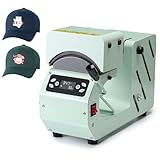
8. OFFNOVA Compact Hat Press – Best for Kids and Narrow Caps
OFFNOVA Hat Heat Press Machine for Caps with 2 Interchangeable Platens, Temp & Time Control with Auto Countdown, Efficient Heat Transfer for HTV Iron On and Sublimation Projects (Auto-Green)
400F max
Platens at 4 x 3 in and 5.5 x 3.7 in
Auto-open with STOP button
Lightweight and portable
Pros
- Smallest platens in the group suit child-sized caps
- Auto countdown with a manual STOP button for early release
- Lightweight and compact for home
- craft fairs or mobile work
Cons
- No pressure control and several buyers report too little pressure
- Plates do not close evenly and transfers crack
- Repeated reports of the arm refusing to go down
- Thin instructions and unresponsive support
The OFFNOVA compact press has one genuinely useful niche: small caps. Its 4 x 3 in platen is the smallest in the roundup, and the 5.5 x 3.7 in second platen covers adult caps, so it handles youth and adjustable child-sized headwear that larger plates overhang. That is a real gap in every other machine on this list.
The cycling is decent, too. It counts down automatically and opens on its own, and the STOP button lets you release early without waiting out the full time, which is handy when you are pressing thin material.
But the pressure story is where this machine falls short, and the reviews are blunt about it. Several buyers report too little pressure for HTV and DTF, and others report the plates do not close evenly, which leads to cracked or uneven transfers. The same buyers describe a centre of gravity problem in the cap, since nothing holds it flat once the press is shallow.
There are also recurring reports of the arm refusing to go down after weeks or months of light use, plus thin instructions and customer service that reviewers describe as unresponsive. This is the lowest-rated machine in the roundup at 4.2, with a 10 percent one-star share.
When this machine suits you
Pick this only if your work is narrow or child-sized caps and iron-on patches rather than full DTF or HTV. Positive reviews concentrate on the auto-open, the portability and the fact that it is simple to set up in a home or craft-fair setting.
For a beginner who only wants to decorate a handful of small caps, it will do that job without the learning curve of a larger machine.
When to skip it
Skip it if you plan to run DTF or HTV at any volume. The absence of pressure control is not a minor limitation on vinyl and DTF; it is the difference between a transfer that bonds and one that peels at the edges.
Skip it if you are relying on support. With recurring arm failures and thin instructions, a machine that stops responding should not be one you have to troubleshoot alone, and the 10 percent one-star share points to exactly that scenario.
9. PowerPress Two-Platen Cap Press – Best for Large Caps and Deep Crowns
PowerPress Hat Heat Press Machine for Caps with 2pcs Interchangeable Platens -Black
110V 550W 10A
Curved 6.7 x 3.8 in upper plate
Two lower platens
Molded silicone platen
Pros
- 550W element heats quickly and evenly
- Same curved plate geometry as the higher-rated Delclynee unit
- Stretcher locks up or down for two-handed placement
- Room to rotate the hat and print around it
Cons
- Top and bottom plates can be non-parallel with no adjustment
- Continuous centre seam can be over-pressed and discoloured
- Some users need silicone or towel shims to stop creasing
The PowerPress uses the same platen geometry as the Delclynee at the top of this list, a curved 6.7 x 3.8 in upper plate with interchangeable 6.7 x 3.8 in and 6.7 x 2.5 in lower platens, and a 550W element that buyers report heats quickly and evenly. One owner who previously worked with a far more expensive commercial press reports smoother operation here, which tells you something about where this machine’s ceiling sits.
Its 6.7 in plate width is the joint largest in the roundup, and that is the reason to consider it. Wide crowns and deep bill shapes that a 6.1 in plate cannot cover are covered by this one, and the cap stretcher locks up or down so you can place the cap with both hands.
It also has room to rotate the hat and print around it with the bill hanging down, which is how you cover a full 360-degree print without removing the cap from the machine four times. The molded silicone lower platen is designed to reduce mark lines and scorching, and at 110V and 10A it draws the same as the Delclynee.
The problem is alignment. With no adjustment, the top and bottom plates can sit non-parallel, and some users find they need shims under the silicone to stop creasing and vinyl shifting. One owner describes the centre seam of a cap getting over-pressed and discoloured at the patch area.
When this machine suits you
Choose this if your caps are wider or deeper than average, or if you want to print 360 degrees around a crown. The plate width and the rotation clearance are the two things it genuinely does better than the smaller budget presses.
It is also a reasonable second machine for someone who wants the wide plate without moving into the far more expensive commercial cap presses that dominate the top of the market.
When to skip it
Skip it if you want a machine that works out of the box with no setup. Shimming and re-shimming the silicone to get parallel plates is real friction, and on a first machine it is the kind of problem that ends up abandoned in a corner.
The 12 percent one-star share is the highest in this roundup, driven by plate alignment and centre-seam problems. Buy a set of spare silicone pads and budget an afternoon for setup before you commit to a run of orders.
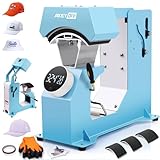
10. AKEYDIY Auto Hat Press – Best Starter Bundle for DTF
AKEYDIY Auto Hat Heat Press Machine for Caps with 3pcs Interchangeable Platens 3-in-1 Automatic Cap Press w/Knob-Style Digital Controller & Auto Open & Release, Heat Transfer Printing for Caps
350W
104-401F
Three platens
Automatic press and release
Bundled cap, transfers, gloves and tape
Pros
- One-button automatic cycle removes the risk of a left-closed press
- Bundle includes a practice cap
- five DTF transfers
- gloves and tape
- Reviewers with hand issues find it easier to operate
- Works for DTF transfers and sleeve prints
Cons
- No pressure adjustment so tall crowns crease
- Fast-closing cycle gives little time to reposition a cap
- Heaviest unit in the group at 18.5 lb
- Thin manual and one report of actuator failure
The AKEYDIY auto hat press is the most complete starter package here, and that bundle is the reason to look at it. It ships with a white cap, five patterned DTF transfers, gloves and a roll of high-temperature tape, so you can calibrate your temperature and dwell on a real cap before you commit a customer order. For DTF specifically, nothing else in this roundup gets you pressing on day one.
On paper it is well equipped: one-button close with automatic pressure adjustment and a timed auto lift with a sound alert, three interchangeable lower cap platens at 5.9 x 3.9 in, 5.9 x 2.8 in and 5.5 x 3 in, a Teflon-coated aluminum plate, knob-style digital control, a 30-minute auto shutdown and a long-arm handle.
Owners like the automatic cycle specifically because it removes the risk of leaving a press closed on a cap, and the included kit is repeatedly praised for letting people learn settings by trial rather than by guesswork. Several reviewers also note it handles DTF transfers and sleeve prints, not just hats.
The catch is the same one that limits the VEVOR automatic press. There is no manual pressure adjustment, so foam and tall-crowned hats pick up creases, and the auto cycle closes quickly, which leaves very little time to reposition a cap you placed a few millimetres off. The manual is thin, and one owner reports the pressure actuator failing after about a year.
When this machine suits you
Choose this if DTF on caps is your main application and you are starting from nothing. The included cap, transfers, gloves and tape remove the most common early-friction point, which is not knowing whether your settings are right.
It is also a sensible option for reviewers with hand issues who find the automatic one-button cycle easier to operate than a lever, and for anyone who wants a cap press that can double for sleeve prints during busy weeks.
When to skip it
Skip it if you work on tall or foam crowns. With no pressure adjustment and a fast-closing cycle, alignment is the weak point, and those are exactly the caps where a small offset shows.
Also consider the 18.5 pound weight, the heaviest unit in this group. It is a bench machine rather than a portable one, and one report of an actuator failure after a year suggests you should keep consumables and spare parts on the order list.
Hat Press Buying Guide
Can you use a flat heat press on a cap?
You can press a cap on a flat platen, but you will fight the crown the whole time. A structured cap has a buckram-reinforced front panel that curves away from any flat surface, so the middle of your transfer bonds and the edges lift. Owners report the two classic failures: wrinkles from air gaps, and press marks from the platen edge cutting into the panel.
What a flat press is good for is a flat surface inside the cap, or a cap with a completely unstructured crown. For anything you are selling, use a curved cap platen. If you also need a garment press for shirts and hoodies, our best heat press machines for t-shirts roundup covers the right shape for that job, and many buyers end up owning one of each.
How to press a structured cap without crushing it
This is the single most repeated complaint in owner feedback, so it is worth the technique. Use the cap stretcher every time: it pulls the front panel forward and holds it flat against the platen so the machine’s downward force goes into the transfer rather than into the crown.
Set the platen to just touch the fabric and add pressure from there. Reviewers of budget presses report that forcing the lever to its stop flattens the front panel and leaves an indentation that never recovers, and that the raised centre seam on a cap can be over-pressed into a discoloured band. If your machine has a pressure knob, use it and stop before the handle bottoms out.
For DTF on caps, t-shirtforums operators running a commercial cap press daily set their top heat to around 290F, which is a useful anchor before you calibrate your own. Peel DTF hot, right after the timer, and press the carrier immediately for a stronger bond. HTV is the opposite: press, then peel the carrier while still warm and press the vinyl itself for a further 20 to 30 seconds.
Finally, check your settings against an external thermometer rather than the display. Buyers repeatedly report that the digital readout and the real platen surface do not agree, and one machine’s listed upper temperature rating is widely thought to overstate actual plate performance. Ten minutes with a thermocouple probe saves a hundred ruined caps.
Pressure: manual lever, gas spring or automatic
A pressure knob or full-range adjustment is the feature that separates a press you grow with from one you work around. The VEVOR 8.5 x 4 in uses a gas spring, the HTVRONT uses a four-bar linkage with a long lever arm, and the two-platen VEVOR uses a straightforward knob. Each lets you tune the press to the cap rather than to the machine.
Fixed-pressure machines are not useless. The automatic models close the press and release on a timer, which is faster for one cap style you press every day. They struggle when a job mixes a low-profile cap and a tall foam crown, because one force cannot suit both.
Platen size for different cap styles
Match the platen to the crown, not to the transfer. Plates in this roundup run from 3.1 x 5.9 in up to 6.7 x 3.8 in. Structured mid-profile caps need roughly 6.5 in of width to avoid pressing the sides, and low-profile or beanie-style headwear suits a shorter 2.5 in platen. Kids caps need something small, around 4 x 3 in, which is why we flag the OFFNOVA for that job.
Two platens is the practical sweet spot for most buyers: one wide for adult crowns, one narrow for low-profile caps. Three platens covers more, at the cost of more swapping.
Voltage, wattage and the circuit breaker question
Almost every machine in this category runs on 110V or 120V. The draw ranges from 350W on the automatic units to 580W on the VEVOR 8.5 x 4 in, with 550W machines sitting at 10A. A 10A load on a shared household circuit is where trips start, so anything at 500W or above belongs on a dedicated circuit if you are running it alongside other appliances.
This trips up first-time buyers more than any other spec, so check your panel before you buy rather than after. Higher wattage also means faster warm-up and better temperature recovery between presses, which is exactly what you want on a long order day.
DTF, HTV, sublimation or patches
If DTF is your primary application, prioritise a cast aluminum or tubular-element plate and a temperature range that reaches past 300F, and choose auto-open so you can hot peel immediately. The AKEYDIY bundle and the Delclynee two-platen press are the strongest fits for that workflow.
For HTV and iron-on, a pressure knob becomes the priority, because vinyl needs force to bond into a woven crown. The two-platen VEVOR and the UOKRR rounded silicone platen handle that well. If you are also building out a broader decoration setup, our picks for the best professional embroidery machines cover the stitched side of the same workflow.
For sublimation, you need a plate that holds an even temperature across its face without hot spots, since colour banding is the giveaway of uneven heat. Cast aluminum and mica-element plates are the safer choices. If you are pressing patches rather than transfers, a lightweight portable machine is enough, and the DTF bundles on the market make a sensible first purchase for anyone who wants to practise before buying a bigger machine.
Maintenance and consumables
Keep a spare sheet of Teflon or silicone protection paper and a roll of heat-resistant tape on hand. Owners across this roundup mention needing both separately, and they are consumables rather than accessories, so treat them as part of the running cost of the machine.
Wipe residue off a cool plate with a damp cloth only, and never use the auto shut-off as an excuse to leave a cap under a closed press. Every automatic machine here includes a 30-minute auto shutdown, and that is a safety net, not a schedule.
Frequently Asked Questions
What is the best hat heat press machine?
The VEVOR 8.5 x 4 in Hat Heat Press is the best all-round choice in our testing, holding temperature steadily across long runs with a 580W dual-tube heater and a cap stretcher that keeps the front panel flat. The Delclynee two-platen press is the strongest alternative, rating highest in the group for even heat and strong pressure.
Can you use a heat press on hats?
Yes, but only with a curved platen sized for a cap. A flat garment press leaves air gaps across a structured crown, which causes wrinkles and lifted transfer edges. A cap press has a small curved platen, usually around 3.5 x 6 inches, plus a stretcher that holds the front panel flat while the transfer bonds.
Do hat heat presses work on structured caps?
Yes, and a curved cap platen is the reason they work. The platen matches the cap curve while the stretcher flattens the buckram-reinforced front panel, so pressure lands on the transfer instead of the crown. Use moderate pressure rather than forcing the lever, or you can flatten the front panel and leave a mark that does not recover.
What temperature and time should I use for DTF on a hat?
Around 290F for roughly 15 to 20 seconds is the working range most operators use for DTF on caps, then peel hot and press the carrier immediately. Operators running a commercial cap press daily report setting top heat to approximately 290F. Always calibrate against your own transfers and an external thermometer rather than the machine display.
Do I need a dedicated circuit breaker for a hat heat press?
For machines rated at 500W and above, such as the 550W and 580W models in this roundup, a dedicated circuit is a sensible precaution because they draw close to 10A at 110V. Lower-wattage 350W machines are easier to share a circuit. If your breaker trips during a press, move the machine to a dedicated circuit before buying a different model.
Which hat heat press machine is best for beginners?
The Delclynee two-platen cap press is the easiest machine here to learn on, with strong even pressure, a simple curved plate and a stay-put cap stretcher that frees both hands. It also carries a lifetime warranty on the heating element. If your caps are child-sized, the OFFNOVA compact press is the only machine in this roundup with a 4 x 3 in platen.
Our Verdict
For most people, the VEVOR 8.5 x 4 in Hat Heat Press is the machine to buy. It has the deepest production history in the category, it holds temperature through long runs, and it stays compact enough for a small workspace. If you want the highest rating and a lifetime warranty on the heating element, the Delclynee two-platen press is the stronger all-round value.
Match the machine to the job instead. The UOKRR rounded silicone platen is the one for structured caps that must not come out marked. The AKEYDIY auto press is the fastest route to running DTF, because it arrives with a cap, transfers, gloves and tape. The EENOUR dual-pad press is the one to put in the car for market days. The HTVRONT cast aluminum press is the durable mid-tier option for anyone who presses across cotton, canvas and polyester. Skip the OFFNOVA unless your caps are child-sized, and skip the PowerPress unless wide crowns are your problem and you will spend an afternoon shimming the plates.
Whichever you choose, buy spare silicone padding and Teflon protection in the same order, and check your circuit panel before the machine arrives. That is the advice that keeps a cap press running cleanly for years rather than months.